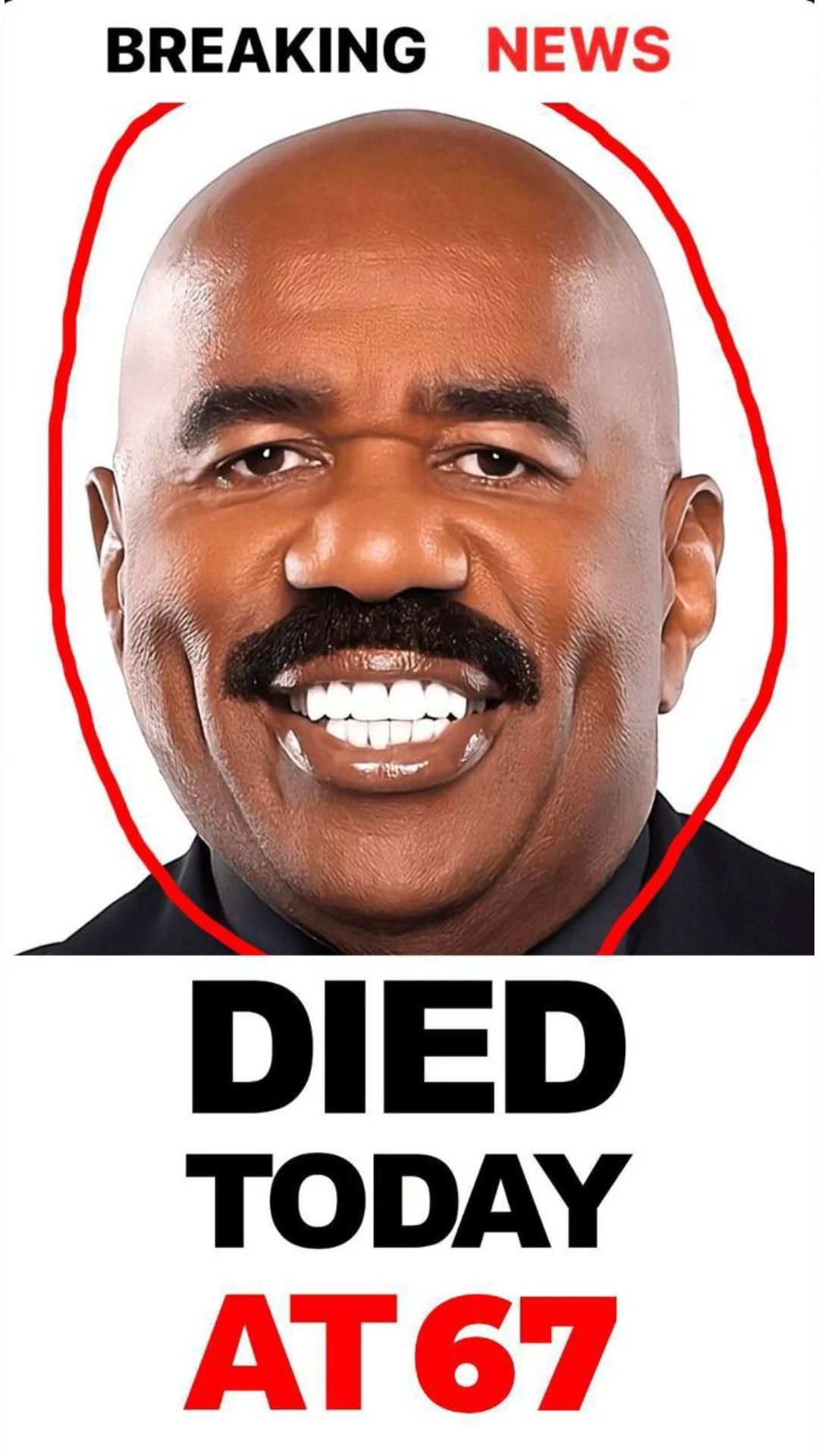
At the beginning of May 2024, a paid Facebook post spread the rumor that Steve Harvey had been fired as host of “Family Feud.” The ad said that he was leaving the game show after almost 14 years. “Tensions Erupt After His On-Air Slip-Up,” the ad said. “Steve Harvey Abruptly Fired From ‘Family Feud,’” it said.
It turned out to be false, though. Harvey wasn’t “booted off of Family Feud,” and Oprah Winfrey hadn’t recently talked to him (see picture below). Also, the ad led to a scam that said Harvey had supported a product called Canna Labs CBD Gummies when he hadn’t. He never said that any kind of CBD candies were good. When we searched Google for more information about Canna Labs CBD Gummies, we mostly found fake web pages and videos.
People who clicked on the ad were taken to a fake CNN story on pastadibern.pro. The headline read, “Steve Harvey Fired from ‘Family Feud’ After Shocking On-Air Confession to Oprah Winfrey.” (It wasn’t possible for us to make a link to an old version of the page.)The fake CNN story was on pastadibern.pro, not cnn.com.
The fake and dishonest story had a fake post on X that was said to be from Harvey’s account (@IAmSteveHarvey).This fake post was never seen on Harvey’s X account.Steve Harvey was quickly fired from ABC’s “Family Feud” after making a mistake during an interview with Oprah Winfrey.This is how the fake CNN story on pastadibern.pro started:
Chris Dungey, CEO of ABC Entertainment, said this morning at TCA that Steve Harvey’s offensive comedy had “absolutely nothing to do with” him being fired from hosting “Family Feud.”Harvey wrote after being fired from “Family Feud” that he was “stunned and blindsided by the show I called home for the last 14 years.”Steve, 67, is famous for hosting the hit daytime show “Family Feud.” He thinks that ABC is firing him because of something he said in an interview with Oprah Winfrey.Harvey went off script last week during the interview and talked about his fight with ED and how he finally got better. Oprah Winfrey stated her point of view:
“I just think those kinds of conversations have their place, and my show isn’t one of them.”She then said, “I’m glad Steve found a solution or something to his problem ‘downstairs,’ but it was rude, and because it was a family event, his hosting job should be canceled.”Harvey didn’t agree and asked, “Why the bad reputation?! ED is something that most guys have trouble with as they age. There ARE real answers, so why hide them? I was in too much pain for too long to keep the truth a secret. Canna Labs CBD Gummies helped me.
The rest of the fake news story had fake quotes and pictures of Harvey’s wife Marjorie and Dr. Phil McGraw from the old talk show “Dr. Phil.”
This rumor about Harvey and CBD goods was first written about by Snopes in 2022. We also disproved other claims that were similar, such as stories that described scams involving Winfrey, Mayim Bialik (former “Jeopardy” host), and many others.
The rumor that refused to die (a fictional story inspired by real misinformation)
Part 1: The click that changed everything
The first person who saw the post was not a journalist.
She was not a television producer.
She was not a celebrity blogger chasing headlines.
She was a retired school librarian named Eleanor Brooks, and she was drinking coffee that had already gone cold.
The headline appeared between a recipe video and a photo of her grandson’s science fair project.
“Breaking News: Steve Harvey Fired From Family Feud After Shocking On-Air Confession.”
She frowned.
It looked real.
The logo resembled a major news network.
The photograph showed a serious expression.
The words were carefully chosen to trigger urgency, curiosity, and disbelief.
Eleanor clicked.
Ten minutes later she was confused.
Twenty minutes later she was worried.
By evening she had shared the story with three friends, each of whom shared it with someone else.
By the next morning the rumor had traveled farther than any truth she had read all week.
What Eleanor did not know was that the article she had clicked did not come from a major news organization.
It came from a website designed to imitate one.
The difference was only a few letters in the address bar.
A detail almost no one noticed.
A detail that changed everything.
The factory behind the rumor
Thousands of miles away, in a cramped office filled with aging computers and glowing monitors, a young man named Adrian watched numbers climb across his screen.
Clicks.
Shares.
Comments.
Ad revenue.
Every refresh meant money.
He did not care who the headline was about.
Yesterday it had been a famous actor.
Last week it had been a beloved singer.
Today it was a television host known to millions.
His employer had one rule.
Emotion beats accuracy.
Fear.
Anger.
Shock.
Outrage.
Those emotions traveled faster than corrections.
A fake story could earn more in six hours than a factual report earned in a week.
Adrian had once studied journalism.
He still remembered professors talking about verification, sources, and responsibility.
Now he optimized headlines for maximum engagement.
Sometimes he told himself he was just writing.
Sometimes he told himself everyone exaggerated online.
Sometimes he avoided thinking about it altogether.
But that morning one number bothered him.
The story was spreading unusually fast.
Faster than expected.
Faster than previous celebrity rumors.
He leaned closer to the monitor.
Comments poured in by the thousands.
“I knew something was wrong.”
“They’ve been hiding this.”
“Finally the truth comes out.”
No one asked for evidence.
No one checked the website.
No one questioned the quotes.
The rumor had become a living thing.
A newsroom with no story
Across town, investigative reporter Maya Chen was having a terrible Tuesday.
Her editor wanted a follow-up on a city budget investigation.
Her inbox contained ninety-three unread emails.
Her phone would not stop buzzing.
Then the social media alerts began.
“Can you confirm Steve Harvey was fired?”
“Is ABC replacing him?”
“Did Oprah really say that?”
Maya searched every legitimate entertainment wire.
Nothing.
No press release.
No network statement.
No industry report.
She opened the viral article.
Immediately she noticed problems.
Anonymous executives.
Quotes without dates.
Screenshots with inconsistent formatting.
A web address that mimicked a major news outlet.
She walked into her editor’s office.
“This story is fake.”
He barely looked up.
“Then why is it everywhere?”
“That’s exactly the story.”
He finally looked at her.
“The rumor?”
“No.
The machine behind it.”
The people who believed it
The hardest part was not exposing the lie.
The hardest part was understanding why it worked.
Maya interviewed dozens of people.
A truck driver in Ohio.
A nurse in Georgia.
A college student in Arizona.
A widow in Michigan.
They were not foolish.
They were not malicious.
They were busy.
They trusted familiar logos.
They assumed someone else had verified the information.
Many admitted they shared the post because it felt important.
One man said quietly, “I didn’t want my friends to be the last to know.”
That sentence stayed with Maya.
Not because it was unusual.
Because it was universal.
The internet had transformed information into a race.
Being first often mattered more than being right.
The daughter who called her father
Maya’s investigation became personal when her own father called.
“Did you hear about Steve Harvey?”
She closed her eyes.
“Yes.”
“It’s terrible.”
“It isn’t true.”
There was a pause.
“But I saw the article.”
“Where?”
He read the website address aloud.
She explained how fake sites copied real news organizations.
How fabricated quotes were inserted into stories.
How celebrity names were used to sell unrelated products.
Silence filled the line.
Finally he asked, “So people are making money from lies?”
“Yes.”
Another pause.
“That seems like a strange business.”
Maya looked out the window.
“It’s one of the biggest businesses on the internet.”
The first crack
Three days later she found the clue she needed.
A digital advertising company had unknowingly served ads on dozens of fake news sites.
The same tracking code appeared across hundreds of pages.
Different celebrities.
Different scandals.
Different diseases.
Different miracle products.
The pattern was unmistakable.
It was not one rumor.
It was an industry.
She pinned printouts across a conference room wall.
Fake endorsements.
Fake interviews.
Fake network logos.
Fake social media posts.
Each story linked to another.
Each domain connected to another.
The wall looked less like journalism and more like organized architecture.
An ecosystem of deception.
Her editor entered quietly.
“How big is it?”
Maya answered without turning around.
“Bigger than anyone wants to admit.”
The message that disappeared
That night an anonymous email arrived.
The subject line contained only three words.
You’re close.
Attached was a spreadsheet.
Thousands of website addresses.
Revenue estimates.
Advertising accounts.
Internal notes.
One entry caught her attention immediately.
The viral Steve Harvey story had been copied and republished across multiple networks within hours.
Automated.
Coordinated.
Engineered.
She reached for the phone.
The sender’s address had already been deleted.
No name.
No signature.
No trace.
Only one sentence remained at the bottom of the document.
“They don’t create news.
They create belief.”
Maya stared at those words long after midnight.
Outside, the city was quiet.
Inside, the investigation was just beginning.
She had started with a celebrity rumor.
She was about to uncover something far more dangerous.
Not a scandal.
A system.
The rumor that refused to die (a fictional story inspired by real misinformation)
Part 2: The invisible network
Maya did not sleep.
She organized the spreadsheet line by line until sunrise stained the windows of the newsroom with pale orange light.
Every domain led somewhere.
Every advertising account connected to another account.
Every payment trail branched into companies that seemed to exist only on paper.
The more she looked, the less random it became.
This was not a collection of prank websites.
It was an invisible network.
By eight o’clock her editor, Daniel, arrived carrying two coffees.
“You look terrible.”
“I found something.”
“You’ve been saying that for three days.”
“No.
I found the structure.”
She turned the monitor toward him.
Colored lines connected hundreds of websites.
Entertainment gossip.
Health scares.
Celebrity deaths.
Financial panic.
Political outrage.
They were all linked.
Daniel stared silently.
“Someone built this?”
“Yes.”
“Who?”
“I don’t know yet.”
He set the coffee down carefully.
“What do you need?”
“A week.”
“You have four days.”
“That isn’t enough.”
“It never is.”
The woman who lost everything
The first real victim was not famous.
Her name was Patricia Gomez.
She was sixty-four years old.
She had clicked the same viral article that Eleanor had shared.
The story eventually led her to a page advertising miracle wellness gummies endorsed by celebrities.
She ordered one bottle.
Then another.
Then a monthly subscription.
When the charges multiplied, she called the customer service number.
It no longer existed.
Her bank account had lost nearly three thousand dollars before the fraud was stopped.
Maya met Patricia in a small apartment filled with framed family photographs.
“I’m embarrassed,” Patricia whispered.
“You shouldn’t be.”
“I should have known.”
“No.
The people who built it wanted you to feel exactly that way.”
Patricia looked down at her hands.
“I kept thinking that if a famous person recommended it, maybe it was safe.”
Maya recorded every word.
Not because Patricia had done something extraordinary.
Because she had done something painfully ordinary.
Trust had been weaponized.
The algorithm
A data scientist named Victor agreed to meet after work.
He brought a laptop covered in faded stickers.
“I used to work for an advertising analytics company,” he said.
“Used to?”
“I quit.”
“Why?”
He hesitated.
“Because we weren’t optimizing information.
We were optimizing attention.”
He opened a visualization.
Thousands of dots pulsed across the screen.
“This is how a rumor spreads.”
Maya watched clusters expand.
“The first wave is curiosity.”
More dots appeared.
“The second wave is emotional reaction.”
The clusters merged.
“The third wave is identity.”
“What does that mean?”
“People begin defending the story because they shared it.
Correcting the rumor feels like correcting them.”
The screen glowed brighter.
“Truth has to travel through verification.
Rumors travel through emotion.”
Maya wrote the sentence down immediately.
Victor looked exhausted.
“You know the worst part?”
“What?”
“The system doesn’t care whether the content is true.
It only cares whether people stop scrolling.”
Eleanor
Eleanor Brooks had deleted the post she shared.
She had also spent two days apologizing to friends and relatives.
Most accepted the apology.
One did not.
Her younger sister called her.
“You keep believing things online.”
“I made a mistake.”
“You’ve made several.”
Eleanor sat quietly.
“I didn’t mean to.”
“I know.”
The silence between them was older than the internet.
It stretched back through years of misunderstandings and stubborn pride.
Finally Eleanor asked, “Do you think people can become more careful?”
Her sister answered softly.
“I think people can become more afraid.
Careful is harder.”
After the call, Eleanor opened her computer.
She searched for information about fake news websites.
She learned about spoofed logos.
Fabricated screenshots.
Phony celebrity endorsements.
Scam funnels.
Affiliate marketing.
She felt something unexpected.
Not shame.
Anger.
Someone had manipulated her kindness.
She had shared the story because she cared.
They had profited because she cared.
The source
The anonymous spreadsheet contained one recurring name.
A company registered in Malta.
Another in Cyprus.
A third in Delaware.
Different owners.
Same payment processor.
Maya requested corporate records.
Most were hidden behind legal intermediaries.
One filing contained a mistake.
A phone number.
She called.
A man answered.
“Hello?”
“I’m looking for Horizon Digital Media.”
Long pause.
“Wrong number.”
“Your number appears on corporate filings connected to several viral news websites.”
Click.
The call ended.
She called again.
No answer.
Thirty minutes later an unmarked envelope arrived at the newsroom reception desk.
Inside was a single photograph.
A warehouse.
No address.
No note.
Only a timestamp from six months earlier.
Daniel’s warning
“You’re getting too close,” Daniel said.
“To what?”
“To people who make money from staying invisible.”
“They’re scammers.”
“They’re organized.”
He closed the office door.
“I’ve seen this before.”
“When?”
“Eight years ago.
A financial fraud investigation.”
“What happened?”
“A reporter ignored warnings.
His sources disappeared.”
Maya studied his face.
“You’re serious.”
“Yes.”
“I can’t stop now.”
“I know.”
“That’s the problem.”
He handed her a folder.
“What’s this?”
“Legal reviewed your draft.”
She opened it.
Whole paragraphs were marked in red.
“We need evidence that survives a courtroom.”
“I’ll get it.”
“You’d better.”
The warehouse
The photograph led to an industrial district outside the city.
Rows of gray buildings stretched beneath a cloudy afternoon sky.
Most were abandoned.
One was not.
Delivery trucks entered through a side gate.
No company name appeared anywhere.
Maya parked across the street.
She waited.
Three hours passed.
At dusk a familiar face emerged from the building.
Adrian.
She recognized him from a professional networking profile linked to digital marketing.
He carried a backpack and looked overworked rather than dangerous.
She followed him to a nearby train station.
“Adrian?”
He turned.
Confusion became alarm.
“Who are you?”
“My name is Maya Chen.
I’m a reporter.”
“I can’t talk.”
“You work for the company behind the fake celebrity stories.”
“You have the wrong person.”
“I know about the spreadsheet.”
His expression changed.
Just for a second.
Fear.
Then he walked away.
She caught up.
“People are losing money.”
“I know.”
“You know?”
He stopped near the platform.
Trains roared in the distance.
“I write headlines,” he said quietly.
“That’s all.”
“You know they’re false.”
“I don’t write the products.”
“You write the lies that lead people there.”
He looked exhausted.
“You think I don’t know that?”
“Then help me.”
He stared at the tracks.
“If I talk, they’ll destroy me.”
“Who?”
“The people you’re looking for.”
The train arrived.
Doors opened.
He stepped inside.
Just before they closed, he said one sentence.
“Meet me tomorrow.
Nine p.m.
Bring no one.”
Then he disappeared into the crowd.
The deleted file
Back at the newsroom Maya opened the spreadsheet again.
A folder she had not noticed before appeared in the archive.
Inside was a file called Belief Engine.
She clicked it.
Access denied.
The file had been remotely deleted.
Every backup copy was gone.
Someone knew she had it.
Someone was watching.
Her computer screen reflected her face in the darkened office.
For the first time since the investigation began, she was not thinking about journalism.
She was thinking about the cost of continuing.
Her phone vibrated.
Unknown number.
One message.
“Truth is expensive.
Are you sure you can afford it?”
She looked out at the empty newsroom.
The city lights flickered below.
Tomorrow night she would meet the man who helped manufacture the rumor.
If he was telling the truth, she was about to enter the heart of the machine.
If he was lying, she might never discover who built it.
Either way, there was no turning back.
The rumor that refused to die (a fictional story inspired by real misinformation)
Part 3: The meeting at platform nine
Maya arrived thirty minutes early.
The station was nearly empty except for commuters hurrying home and a street musician playing a tired melody on an old violin.
She chose a bench with a clear view of every entrance.
Daniel had insisted she bring someone.
She had refused.
Now she wondered whether that had been a mistake.
At exactly nine o’clock Adrian appeared.
He wore the same backpack.
The same exhausted expression.
But something was different.
He kept looking over his shoulder.
“You came alone,” he said.
“You told me to.”
He sat beside her without making eye contact.
“They monitor phones.”
“Then why contact me?”
“Because I couldn’t keep doing it.”
Maya waited.
People often filled silence when they were ready to confess.
Adrian finally spoke.
“The celebrity stories are only the front door.”
“What’s behind it?”
“A pipeline.”
“For what?”
“Everything.”
He unzipped his backpack and removed a small external hard drive.
“I copied this before they erased the files.”
Maya stared at the device.
“This contains the network?”
“It contains enough.”
“Why not give it to the police?”
He laughed bitterly.
“You still think this is small.”
He handed her the drive.
“The websites are connected to advertising brokers, data brokers, shell companies, and influence campaigns.”
“Influence campaigns?”
“They don’t just sell fake products.
They sell attention.”
A train thundered past.
When the noise faded, Adrian looked directly at her for the first time.
“Do you know what our boss used to say?”
“No.”
“He said, ‘Facts are expensive.
Emotions are scalable.’”
The files
Back in the newsroom Maya plugged the drive into an isolated computer.
Daniel stood behind her.
“What am I looking at?”
“Maybe the whole operation.”
Folders appeared across the screen.
Templates.
Invoices.
Advertising contracts.
Fake interview scripts.
Artificial social media engagement plans.
One folder was labeled Authority Assets.
Inside were professionally designed graphics imitating major news organizations.
Network logos.
Government seals.
Celebrity social media layouts.
Everything needed to manufacture credibility.
Another folder was labeled Conversion Paths.
The documents mapped the psychological journey of a user.
Shock.
Curiosity.
Validation.
Urgency.
Purchase.
Subscription.
Recurring billing.
“This is a blueprint,” Daniel whispered.
“No,” Maya said quietly.
“It’s a business model.”
The voice behind the screen
Among thousands of files was a single audio recording.
No date.
No title.
Maya pressed play.
A calm male voice filled the room.
“People don’t buy products.
They buy relief.”
Silence.
“They don’t share information.
They share identity.”
Another pause.
“If they trust a celebrity, borrow the celebrity.
If they trust a news brand, borrow the news brand.
If they trust each other, make them spread it for free.”
Maya felt a chill.
The voice continued.
“The correction will always arrive later.
And later is where profit lives.”
Daniel stopped the recording.
“Can we identify him?”
“We’ll try.”
Adrian’s story
The next evening Adrian met Maya in a public library.
He refused restaurants.
He refused parks.
He refused anywhere with security cameras he did not understand.
“I was recruited through a freelance writing platform,” he said.
“They wanted entertainment content.”
“What happened?”
“The headlines became more aggressive.
Then they asked for fabricated quotes.”
“Did you object?”
“At first.”
“And?”
“They doubled my pay.”
He looked ashamed.
“My mother was sick.
I had debt.
I told myself everyone exaggerated online.”
“When did you realize what it really was?”
“When customer complaints started arriving.”
He swallowed hard.
“An elderly man lost his retirement savings after clicking one of my stories.”
Maya said nothing.
“I tried to quit.
They reminded me I had signed confidentiality agreements.”
“That wouldn’t stop you.”
“No.”
He looked at her.
“The threats would.”
He opened a notebook.
“These are the names I remember.
Managers.
Developers.
Payment coordinators.
Editors.”
Maya took the notebook carefully.
One name was circled repeatedly.
Leon Varga.
Leon Varga
No photographs existed.
No interviews.
No conference appearances.
The corporate records listed him only through intermediaries.
Victor, the data scientist, searched encrypted business registries.
Three hours later he found a pattern.
Varga had controlled advertising technology companies that dissolved shortly before regulatory investigations.
“He’s a ghost,” Victor said.
“Ghosts leave footprints.”
“These are footprints.”
He pointed to the screen.
“The same infrastructure appears behind fake investment schemes, miracle health products, celebrity scandals, and election misinformation.”
Maya stared at the connections.
“So the rumors were never the goal.”
“They were the bait.”
Eleanor fights back
Eleanor Brooks had spent weeks blaming herself.
Then she decided guilt was useless.
She began teaching free workshops at the local library.
How to check a website address.
How to verify a quote.
How reverse image searches worked.
The first session attracted six people.
The second attracted twenty-two.
The third filled the room.
A teenager sat beside a retired engineer.
A nurse beside a construction worker.
Eleanor stood before them holding a printed screenshot of the viral celebrity story.
“I believed this,” she said.
“And that is exactly why we’re here.”
Someone asked, “How do we know what’s real anymore?”
She smiled sadly.
“We ask better questions.”
After the workshop, a woman approached her.
“My husband shared that same story.”
Eleanor nodded.
“He was embarrassed.”
“So was I.”
The woman reached for Eleanor’s hand.
“Thank you for telling us the truth.”
For the first time since sharing the post, Eleanor felt something other than regret.
She felt useful.
The leak
Maya’s article was almost ready.
Thirty-two pages.
Dozens of documents.
Interviews with victims.
Advertising records.
Corporate filings.
Technical analysis.
Then someone leaked a rumor.
Not about a celebrity.
About Maya.
Anonymous accounts claimed she was fabricating evidence.
That she was politically motivated.
That she was working for competitors.
Fake screenshots appeared online.
Edited emails.
Manufactured messages.
Daniel looked grim.
“They’re doing to you what they did to everyone else.”
“My own investigation.”
“Yes.”
Her phone exploded with abuse.
Friends asked whether the allegations were true.
Sources stopped responding.
An editor at another publication tweeted that the evidence looked suspicious.
Maya sat in silence.
“This is how they survive,” she whispered.
“What?”
“They don’t just create lies.
They create doubt.”
The confrontation
Adrian called after midnight.
“They know about the hard drive.”
“Where are you?”
“I can’t tell you.”
“What happened?”
“They’re shutting everything down.”
“Who?”
“Varga.”
“Can you prove he exists?”
“Yes.”
A pause.
“There’s one place.”
He gave her an address.
“Come before sunrise.”
The building overlooked the harbor.
An old office tower surrounded by construction fences.
Adrian was waiting in the lobby.
He led her upstairs to a vacant floor.
Rows of empty desks stretched into darkness.
At the far end stood a glass office.
Inside, a single computer remained powered on.
“This was his office,” Adrian said.
“Where is he?”
“Gone.”
The computer screen displayed a dashboard.
Real-time traffic from hundreds of websites.
Millions of visitors.
Revenue counters increasing every second.
Maya whispered, “This is enormous.”
Adrian nodded.
“I told you.”
A notification appeared.
System archive initiated.
Files began disappearing.
Maya rushed forward.
“Can you stop it?”
“I can slow it.”
He started copying data.
The progress bar crawled.
Twelve percent.
Nineteen percent.
Twenty-four percent.
Footsteps echoed in the hallway.
Adrian froze.
“They’re here.”
The office lights went dark.
The computer continued glowing in the darkness.
Thirty-one percent.
Thirty-eight percent.
The footsteps grew louder.
Someone was coming.
And whatever remained on that computer might be the only evidence that Leon Varga had ever existed.
The rumor that refused to die (a fictional story inspired by real misinformation)
Final part: The cost of the truth
The footsteps stopped outside the glass office.
Maya could hear her own breathing.
The computer screen illuminated Adrian’s face as the transfer bar inched forward.
Forty-one percent.
Forty-two percent.
Forty-three.
“Keep copying,” Maya whispered.
Adrian’s fingers moved across the keyboard.
“I’m trying.”
The office door opened slowly.
A security guard stepped inside.
He looked confused more than threatening.
“This floor is closed.”
Maya stood.
“We’re leaving.”
The guard glanced at the computer.
“Is that machine still running?”
Adrian answered calmly.
“It won’t be for long.”
The guard sighed.
“I don’t get paid enough for this.”
He turned away.
“You have two minutes.”
The door closed again.
Neither of them spoke.
Fifty-one percent.
Fifty-nine percent.
Sixty-eight percent.
The archive process accelerated.
Files vanished from the server faster than they could be copied.
“We’re losing it,” Adrian said.
“No.”
“We’re losing most of it.”
Maya looked at the screen.
Then she looked at him.
“How much do we need?”
He hesitated.
“Enough.”
Enough
The copy stopped at seventy-three percent.
The remaining files were gone.
The servers were wiped.
The dashboard went dark.
Silence filled the office.
Adrian removed the drive.
“It’s over.”
Maya looked at the blank screen.
“No.
It’s just changed.”
She had wanted everything.
Every document.
Every name.
Every transaction.
Instead she had enough.
Enough to prove the network existed.
Enough to show how it worked.
Enough to expose the lie behind the lie.
The article
Daniel read the final draft in complete silence.
When he reached the last page, he removed his glasses.
“This will make powerful people angry.”
“It isn’t about power.”
“It is now.”
The legal department reviewed every sentence.
Every quote was verified.
Every document was authenticated.
Every technical claim was checked by independent experts.
The article was published at exactly 6:00 a.m.
Its headline was simple.
The Rumor Factory: How Fake Celebrity News Became a Billion-Dollar Scam
There were no sensational claims.
No dramatic accusations without evidence.
No manipulated images.
No anonymous conspiracy theories.
Just documents.
Interviews.
Data.
And the story of how ordinary people had been manipulated.
The reaction
At first, almost nothing happened.
The article received modest traffic.
A few thousand readers.
Then a cybersecurity researcher shared it.
Then a consumer protection attorney.
Then a national news organization.
By afternoon the story was everywhere.
Television networks discussed fake celebrity endorsements.
Technology experts analyzed advertising fraud.
Banks warned customers about scam websites.
Regulators announced investigations into deceptive digital marketing networks.
The article was translated into seven languages.
What surprised Maya most was not the attention.
It was the emails.
Hundreds of them.
“I thought I was the only one.”
“My father lost money.”
“My grandmother believed a fake interview.”
“I shared something that wasn’t true.”
The victims had never been connected.
Until now.
Adrian
Adrian testified before investigators.
He provided records.
Payment histories.
Internal communications.
He expected to disappear afterward.
Instead he found work with a nonprofit organization that taught digital literacy.
His first public lecture was held in a community college classroom.
He stood before thirty students and said, “I used to write headlines that fooled millions of people.”
The room was silent.
“I’m not proud of that.”
A student raised her hand.
“Why are you telling us?”
“Because the people who create deception depend on silence.”
Another student asked, “Can misinformation really be that powerful?”
Adrian thought for a long moment.
“It can empty bank accounts.
It can destroy reputations.
It can separate families.
It can make strangers hate each other.
Yes.
It can be that powerful.”
He paused.
“But truth has something deception never has.”
“What?”
“The ability to survive scrutiny.”
Eleanor
The library workshops continued.
Months later they expanded into neighboring towns.
Eleanor never called herself an expert.
She called herself a former victim.
She began every session the same way.
“I believed a story because it looked real.”
Then she taught people how to slow down.
Check the source.
Read beyond the headline.
Look for confirmation.
Ask who benefits.
One afternoon a teenage boy approached her after class.
“My grandfather keeps sharing fake stories.”
Eleanor smiled.
“So did I.”
“What should I do?”
“Don’t mock him.”
“Why not?”
“Because shame closes ears.
Curiosity opens them.”
The boy nodded slowly.
“I think I can do that.”
Patricia
Patricia Gomez never recovered all of her money.
But she recovered something else.
She stopped believing that being deceived made her foolish.
She began volunteering with fraud prevention organizations.
When she spoke to seniors, she always said the same sentence.
“Scammers study human kindness the way doctors study medicine.”
People listened.
Because she spoke without judgment.
Because she knew the feeling of embarrassment.
Because she had survived it.
The hearing
Six months after publication, a congressional committee held hearings on digital fraud and misinformation networks.
Experts testified.
Technology executives answered questions.
Consumer advocates presented evidence.
Maya was asked to speak.
She sat before microphones and cameras and lawmakers.
One senator asked, “What is the biggest misconception about fake news?”
Maya answered carefully.
“That it is primarily about politics.”
She continued.
“It is often about profit.
Attention is monetized.
Trust is monetized.
Confusion is monetized.
The celebrity rumor is not the product.
The user is the product.”
The room was quiet.
Another senator asked, “What can people do?”
Maya looked directly at the committee.
“The most radical act online is patience.”
The message
A year later an envelope arrived at the newsroom.
No return address.
Inside was a single sheet of paper.
It contained one sentence.
You were right.
I left.
No name.
No explanation.
Maya smiled.
She never discovered whether it came from a former employee, a victim, or someone still trapped inside a deception network.
She kept the note anyway.
The correction
The rumor about Steve Harvey eventually faded.
As most rumors do.
Not because everyone saw the correction.
Many never did.
Some continued believing it.
Others forgot it entirely.
But the investigation changed something deeper.
It reminded people that false stories do not spread by accident alone.
They are often designed.
Engineered.
Tested.
Refined.
And sold.
The real story was never that a television host had been fired.
The real story was how easily a familiar face could become a tool in someone else’s business model.
How quickly trust could be manufactured.
How slowly truth had to travel.
The last conversation
Years later Maya visited the library where Eleanor still volunteered.
The workshops had become a permanent program.
Children attended.
Parents attended.
Retirees attended.
Eleanor was older now.
Her hair had turned completely white.
She poured tea into two cups.
“Do you ever get tired?” she asked.
“Of fighting lies?”
“Yes.”
Maya considered the question.
“Sometimes.”
“Then why keep doing it?”
Maya looked around the room.
A father was helping his daughter verify a website.
An elderly man was learning how to identify a scam message.
A teenager was explaining image manipulation to her grandmother.
“Because truth is not a destination,” Maya said quietly.
“It’s a habit.”
Eleanor smiled.
“That sounds like something a librarian would say.”
“It sounds like something you taught me.”
They sat in comfortable silence.
Outside, people walked past the library carrying phones filled with headlines, notifications, videos, and endless information.
Some of it was true.
Some of it was false.
Most of it demanded immediate attention.
Inside the library, a small sign hung near the entrance.
It contained only seven words.
Pause.
Check the source.
Then decide.
Maya looked at the sign for a long time.
The rumor had begun with a click.
The ending began with a pause.
And sometimes, she realized, that pause was the difference between becoming part of the story and understanding it.
The end.
THANKS YOU FOR READING
