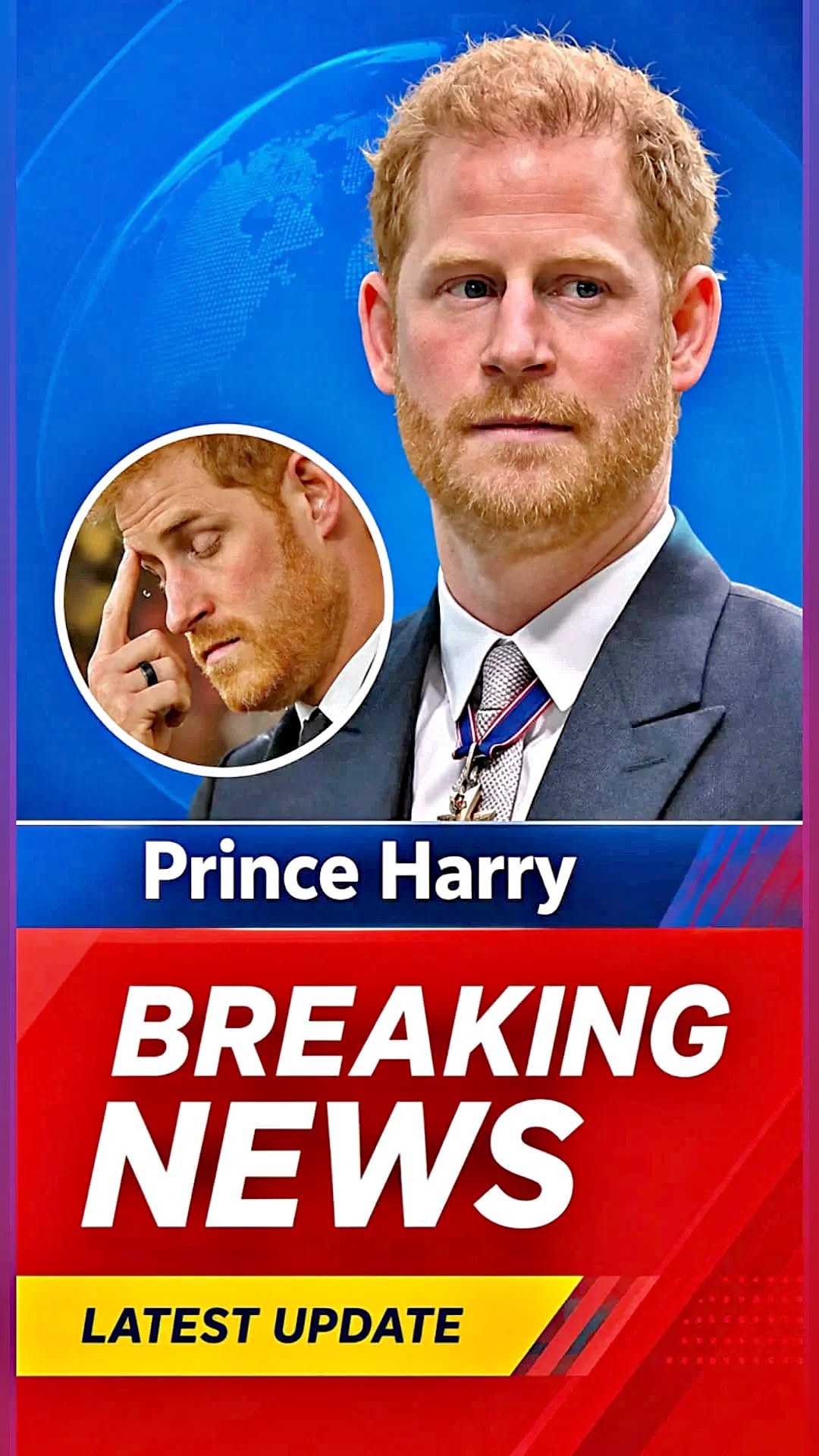
Prince Harry, the Duke of Sussex, remains at the center of worldwide attention as his life continues to be shaped by a complicated mix of legal challenges, royal family tensions, and his efforts to build a new identity away from traditional royal duties. In recent months, the prince has faced one of the most difficult periods since stepping back from official royal responsibilities, with major developments affecting both his public image and personal journey.
One of the biggest stories surrounding Prince Harry has been his legal battle against Associated Newspapers, the publisher of the Daily Mail. Harry, along with several other public figures, brought claims alleging unlawful information-gathering practices. However, the High Court dismissed the case, creating a major setback for the Duke of Sussex and raising questions about possible legal costs following the decision.
The ruling became a significant moment in Harry’s long-running campaign against what he has described as intrusive media practices. For years, the prince has spoken openly about his belief that aggressive press coverage caused serious harm to his family and contributed to his decision to leave royal life in Britain. The latest court decision has therefore become another chapter in a battle that has followed him since he and Meghan Markle stepped away from their senior royal roles.
Beyond the courtroom, attention has also focused on Harry’s relationship with the Royal Family. Reports have highlighted continued uncertainty surrounding his visits to the United Kingdom, including discussions about security arrangements and accommodation during his trips. These issues have remained sensitive because Harry has repeatedly expressed concerns about safety for himself, Meghan, and their children when returning to Britain.
Despite these challenges, there have also been signs of possible communication between Harry and members of his family. Reports have suggested that private family meetings and reunions remain an important topic of discussion, especially regarding his relationship with his father, King Charles III. However, the future of his relationship with other members of the royal family remains uncertain, particularly amid years of public disagreements and media attention.
Meanwhile, Prince Harry continues to focus on charitable projects and causes that have been central to his public identity. His work with veterans through the Invictus Games remains one of his most recognized achievements, highlighting his continued connection to military communities and wounded service members around the world.
Harry and Meghan have also continued their work through Archewell Productions, producing projects focused on social issues, personal stories, and community themes. Their efforts demonstrate their attempt to create a new public role outside the traditional structure of the British monarchy.
However, public opinion about Prince Harry remains deeply divided. Supporters argue that he has been brave in speaking about personal struggles and protecting his family’s privacy. Critics believe his repeated public discussions about royal conflicts have created further tension with the institution he once represented.
As Prince Harry moves forward, his biggest challenge may be balancing two worlds: the royal identity he was born into and the independent life he has chosen to create. His decisions, legal battles, and future appearances will likely continue attracting global attention, making him one of the most closely watched members of the modern royal family.
For now, Prince Harry’s story remains unfinished — a journey marked by controversy, personal choices, family struggles, and a search for a new purpose beyond the palace walls.
Beyond the palace walls
Part one: the road that did not end
The first thing Harry noticed was the silence.
Not the silence of a courtroom after a judge leaves the bench.
Not the silence of a palace corridor where staff members lower their voices as someone important passes.
This was a different kind of silence.
It was the silence that comes after a chapter of your life closes, but before the next one has revealed its name.
The car moved slowly through the rain-soaked streets.
London blurred behind the glass, each reflection stretching into another, as if the city itself could not decide whether it was looking backward or forward.
Across from him sat a leather briefcase filled with documents that had suddenly become heavier than paper should ever be.
Legal opinions.
Court filings.
Cost estimates.
Private correspondence.
Public headlines.
A lifetime compressed into folders with typed labels.
His phone buzzed again.
Another message.
Another headline.
Another opinion from someone who had never met him.
He looked at the screen for only a moment before turning it face down.
“Do you want me to answer that?” the driver asked quietly.
Harry stared out the window.
“No.”
The answer was immediate.
Too immediate.
Because the truth was that he no longer knew which messages deserved answers and which ones deserved silence.
For years he had believed that speaking would set him free.
Now he was beginning to wonder whether every answer simply created another question.
Rain tapped against the glass in slow, uneven rhythms.
He remembered another rainy day years earlier.
A much younger version of himself standing outside a church.
Crowds.
Cameras.
Flowers.
Grief.
He had spent much of his life believing that memory was something that happened in the past.
He was slowly learning that memory could also become a place you never completely leave.
The driver cleared his throat.
“There’s one thing you should know.”
Harry looked up.
“There’s someone waiting.”
He frowned.
“I didn’t schedule anyone.”
“I know.”
“Who is it?”
The driver hesitated.
“He wouldn’t give a name.”
That was unusual.
Almost impossible.
Nothing in Harry’s world happened without names, schedules, security checks, confirmations, and contingency plans.
“Did security clear him?”
“They cleared the property.”
“That’s not what I asked.”
“No.”
The car turned through a narrow gate.
The house was modest by royal standards.
That was intentional.
He had grown tired of buildings that felt like museums pretending to be homes.
This place had trees that grew naturally.
Windows that opened.
Rooms that were allowed to be untidy.
It was one of the few places where he could sometimes remember what ordinary felt like.
The car stopped.
The rain had softened into mist.
Harry stepped out.
Near the front gate stood an elderly man in a dark coat.
He carried no umbrella.
No briefcase.
No camera.
No visible urgency.
He simply waited.
Security officers remained nearby, watchful but strangely relaxed.
The man looked familiar.
Not because Harry knew him.
Because he belonged to a generation of faces that had once filled palace receptions, military ceremonies, charity events, and private gatherings where children were expected to smile politely and remember names they would later forget.
The man inclined his head.
“Your Royal Highness.”
Harry smiled faintly.
“I don’t use that anymore.”
The man’s expression did not change.
“I know.”
“Then Harry is fine.”
“Very well.”
A pause settled between them.
“You’ve come a long way,” Harry said.
“Yes.”
“For what?”
The old man looked toward the trees.
“To return something that was never mine.”
Harry felt the familiar tightening in his chest.
“What are you talking about?”
Instead of answering, the man reached inside his coat and removed a small wooden box.
It was weathered.
Simple.
Unmarked.
No crest.
No initials.
No indication of what it contained.
“I was instructed to deliver this only after a certain event.”
“What event?”
“The day you stopped fighting the battle everyone else could see.”
Harry stared at him.
“I don’t understand.”
“I didn’t expect you would.”
The old man extended the box.
Harry did not take it immediately.
“What is it?”
“A letter.”
“From whom?”
The old man met his eyes.
“Someone who believed that one day you would have to choose between being understood and being at peace.”
The words landed with unsettling precision.
Harry took the box.
It was surprisingly light.
“When was this written?”
“A long time ago.”
“How long?”
“Long enough that the person who wrote it never expected to explain it.”
Harry looked down at the wood.
The grain had darkened with age.
One corner had been repaired carefully, almost lovingly.
“Why now?”
“Because the conditions were met.”
“What conditions?”
The old man smiled sadly.
“The writer believed that grief wears different disguises.”
Another pause.
“The first is anger.”
“The second is purpose.”
“The third is certainty.”
“And the last is exhaustion.”
Harry looked up sharply.
The man continued.
“You have reached the last one.”
The words should have offended him.
Instead, they felt strangely familiar.
As if someone had quietly described a room he had been living in without realizing it.
“Who are you?”
“My name would not help you.”
“It might.”
“No.”
The old man stepped backward.
“You’ll find everything that matters inside.”
“Wait.”
“There’s one more thing.”
Harry said nothing.
“When you finish reading, don’t call the palace.”
The sentence froze the air between them.
“Why would I call the palace?”
“Because your first instinct will be to ask whether it’s true.”
“And is it?”
“That is the wrong question.”
The old man turned and walked toward the gate.
Security did not stop him.
The mist swallowed him with surprising speed.
Within seconds he was gone.
Harry stood alone beneath the gray sky.
The wooden box rested in his hands.
Inside the house, somewhere beyond the front door, his family waited.
Normal conversations.
Children laughing.
Dinner plans.
The ordinary life he had fought so hard to create.
And yet all he could think about was a sentence spoken by a stranger.
Don’t call the palace.
He entered the house quietly.
The hallway smelled of tea and cedar.
He carried the box upstairs to his study.
The room was lined with books that had been chosen, not inherited.
A desk faced a window overlooking the trees.
He sat down.
For a long time he simply looked at the box.
Then he opened it.
Inside was a single envelope.
Cream-colored.
Thick.
Sealed with dark red wax.
There was no royal crest.
Only three handwritten words.
For Harry alone.
His fingers trembled.
He broke the seal carefully.
A folded letter slipped into his hands.
The handwriting was unmistakably elegant.
Old-fashioned.
Deliberate.
At the top of the page, before the first sentence began, was a date from decades earlier.
And beneath it, a name that made the room seem suddenly smaller.
He whispered it once.
Then again.
Because some names do not merely belong to people.
They belong to entire versions of your life.
Outside, the rain began again.
Inside, Harry unfolded the first page.
And before he reached the end of the opening paragraph, he realized that the story he thought had been ending had never been the real story at all.
Part two: the letter that remembered everything
Harry read the first paragraph twice.
Then a third time.
Not because the words were difficult to understand.
Because they were impossible to place.
The handwriting belonged to someone from another era.
The tone belonged to someone who had known the palace from the inside.
And the memories described in the opening lines belonged to moments that had never appeared in any documentary, biography, interview, or newspaper archive.
He leaned back in the chair.
The study had become unnaturally quiet.
Even the rain seemed distant.
He looked again at the signature.
It remained the same.
A name from the past.
A name that should not have been connected to him in this way.
The first page began without ceremony.
Harry,
If you are reading this, then the world has already tried to explain your life to you.
Do not let it.
He closed his eyes.
The sentence lingered.
For years he had listened to explanations.
Journalists had explained him.
Commentators had explained him.
Friends had explained him.
Strangers had explained him.
Even people who claimed to love him had often explained him before asking him who he was.
He continued reading.
There are two histories of every family.
One is written for the public.
The other is carried quietly by the people who survive it.
His hands tightened around the paper.
The letter was not sentimental.
It was not apologetic.
It was written with the calm precision of someone who had spent years observing rooms where important conversations happened behind closed doors.
The next paragraph described a winter evening decades earlier.
A fire in a drawing room.
A disagreement between senior members of the family.
A child who had wandered into the room unnoticed.
Harry frowned.
He remembered the evening.
Not clearly.
Only fragments.
The smell of smoke.
A clock.
Someone laughing too loudly.
A hand on his shoulder.
He had always assumed the memory was incomplete because he had been young.
The letter suggested something else.
That he had remembered exactly what mattered.
A knock came at the door.
He folded the letter quickly.
Meghan entered quietly.
She looked at him for a long moment before speaking.
“You’ve been in here for almost an hour.”
“I know.”
She noticed the envelope.
“What is it?”
“I’m not sure.”
She walked closer.
His expression must have worried her.
She sat beside him.
“You look like you’ve seen a ghost.”
He gave a tired smile.
“Maybe I have.”
She reached for his hand.
“Do you want to tell me?”
He hesitated.
Then handed her the first page.
She read it slowly.
Her eyes moved carefully across each line.
When she finished, she looked up.
“Who wrote this?”
He told her.
She was silent.
For several seconds neither of them spoke.
Finally she asked the question he had been avoiding.
“Do you think it’s real?”
“I don’t know.”
“The details?”
“They’re… strange.”
“In what way?”
“They’re too specific.”
She looked back at the letter.
“Anyone could invent details.”
“Not these.”
“What do you mean?”
He stood and walked to the window.
“When I was about eight, there was a night during a family gathering.”
He kept looking outside.
“I remembered almost nothing about it.”
He paused.
“Until today.”
Meghan waited.
“There was an argument.”
“Between who?”
“I don’t know.”
“But I remember hiding behind a chair.”
He turned toward her.
“I remember someone saying, ‘Children hear more than adults believe.’”
His voice had become quieter.
“I have never told that memory to anyone.”
She looked down at the page again.
The sentence was there.
Exactly as he had spoken it.
The room seemed colder.
“Could someone else have known?” she asked.
“Maybe.”
“Someone who was there?”
He nodded slowly.
“But why write to me?”
Meghan examined the envelope.
“There’s more.”
He returned to the desk.
The second page was longer.
More personal.
It spoke of duty.
Not as a privilege.
As a language.
You were born into a family that often mistakes endurance for healing.
The difference matters.
Endurance keeps institutions alive.
Healing keeps people alive.
Harry stopped reading.
He laughed once.
Softly.
Without humor.
“What?”
“That sentence.”
“What about it?”
“It sounds like something I’ve spent years trying to say.”
Meghan looked at him carefully.
“Maybe that’s why it affects you.”
He continued.
The letter described corridors where silence was considered loyalty.
Conversations postponed until they became impossible.
Love expressed through responsibility rather than affection.
People protecting one another by refusing to speak.
The words were not cruel.
They were painfully compassionate.
As if the writer loved the family deeply while understanding exactly how it could wound itself.
Then came a paragraph that changed everything.
One day you will believe that the greatest question is whether they were fair to you.
It is not.
The greatest question is whether you will become a man who needs them to admit it before you can live.
Harry lowered the page.
His chest felt tight.
Meghan spoke first.
“That’s not a political statement.”
“No.”
“That’s a personal one.”
He nodded.
For the first time that day, he realized the letter was not trying to prove anyone wrong.
It was trying to free someone.
He looked inside the box again.
There was something beneath the remaining pages.
A small folded note.
Different handwriting.
Short.
Only one sentence.
The map is in the library.
He stared at it.
“What library?”
Meghan asked.
“I have no idea.”
He turned the note over.
On the back was a tiny embossed symbol.
Not a royal crest.
A tree.
An oak tree enclosed within a circle.
Harry felt a sudden jolt of recognition.
He had seen that symbol before.
Years earlier.
In a forgotten room at an old country estate where retired household staff had gathered for a private memorial service.
A room filled with photographs.
Ledgers.
Letters.
Records that had never entered the official archives.
At the center of the room had been an oak carved into a wooden panel.
He had asked what it meant.
An elderly woman had smiled and said, “Some families have histories.”
Then she had added quietly, “Yours has keepers.”
At the time he had thought she was speaking poetically.
Now he was no longer sure.
Meghan stood.
“What are you thinking?”
“That I need to find out who sent this.”
“The old man?”
“He was only the messenger.”
She looked toward the window.
“If this is genuine…”
He finished the sentence for her.
“Someone waited decades.”
The rain intensified.
Thunder rolled somewhere beyond the trees.
Harry gathered the pages carefully and returned them to the box.
He was about to close the lid when another folded sheet slipped from the bottom.
It had been hidden beneath the lining.
He unfolded it.
This page contained no letter.
No signature.
Only a list of names.
Some were familiar.
Some were not.
Several had dates beside them.
One name had a single instruction written next to it.
Ask him about the library before September.
Harry stared at the date.
Today was August fifth.
He had less than a month.
Meghan looked over his shoulder.
“Who is he?”
Harry read the name again.
His face lost color.
“I thought he died fifteen years ago.”
And at that exact moment, the telephone on the desk began to ring.
Neither of them moved.
It rang once.
Twice.
Three times.
Finally Harry answered.
A quiet voice spoke on the other end.
“Do not tell anyone about the letter.”
The line went silent.
Then came one final sentence.
“They have already started looking for it.”
The call disconnected.
Part three: the keeper of the library
Harry held the phone for several seconds after the line went dead. The silence that followed was heavier than the call itself. Meghan watched him carefully. “What did they say?” He lowered the receiver slowly. “They said not to tell anyone about the letter.” She looked at the wooden box. “And then?” “They said someone was looking for it.” The words sounded different when spoken aloud. Less mysterious. More dangerous. Meghan sat across from him. “In a novel, I’d say that’s the moment the story begins.” Harry managed a faint smile. “It feels like the moment someone else started writing it.” He opened the box again. The list of names remained exactly as before. No hidden compartments. No secret mechanism. Just aging paper and elegant handwriting. Meghan traced the embossed oak symbol with her finger. “This keeps appearing.” “I know.” “You’ve seen it before.” “Yes.” He walked toward a bookshelf along the far wall. One shelf contained old journals, military histories, biographies, and a few inherited volumes that had survived several moves. He searched quietly. Not for a specific book. For a memory. After several minutes he pulled out a worn leather volume. Inside the front cover was a faded bookplate. An oak tree enclosed within a circle. Meghan looked up. “The same symbol.” Harry nodded. “I never noticed it.” He turned several pages. The book was mostly blank. Near the center, however, someone had written a single sentence in pencil decades earlier. Truth requires witnesses. No signature. No date. Just those three words. Meghan looked from the book to the letter. “This wasn’t random.” “No.” “It was prepared.” Harry stared at the penciled sentence. For the first time since the old man had appeared at the gate, he felt something unexpected. Not fear. Direction. The name on the list echoed in his mind. The man he had believed dead. A former archivist who had once worked for one of the royal estates in the fictional world of this story. An eccentric scholar. A collector of forgotten correspondence. A man who believed that history was not made by kings but by the people who preserved their letters. Harry remembered visiting him once as a teenager. The archivist had asked unusual questions. Not about school. Not about duty. About memory. “What do you remember that no one else remembers?” Harry had laughed. The old man had not. Now the memory returned with unsettling clarity. Meghan broke the silence. “If he’s alive, where would he be?” Harry looked at the note again. Ask him about the library before September. “There was a place.” “What kind of place?” “A private archive.” “Owned by the family?” He shook his head. “Protected from the family.” She frowned. “I don’t understand.” “Neither do I.” He sat down again and unfolded the remaining pages of the letter. The next section was different. Less philosophical. More practical. It described a hidden collection of personal correspondence, journals, and recorded conversations maintained by a small circle of custodians known only as the Keepers. Their purpose was not political. It was historical. Official records preserved decisions. Private records preserved motives. The letter warned that institutions often survived by simplifying the past. The Keepers existed to preserve complexity. Meghan looked at him carefully. “This sounds impossible.” “I know.” “But it also explains the symbol.” He continued reading. One passage caught his attention immediately.
If you seek the library, do not seek a building.
The library has moved many times.
It exists wherever memory is protected from ambition.
Harry read the sentence twice. “A moving library.” “A network,” Meghan said quietly. He looked at her. She continued. “People, not shelves.” The idea settled between them. A library carried by individuals. Letters hidden in homes. Journals entrusted across generations. Histories surviving because someone refused to destroy them. Harry suddenly remembered the old woman at the memorial service. “Yours has keepers.” He had misunderstood her. She had not been speaking metaphorically. A knock sounded downstairs. Both of them froze. Security. Footsteps. A brief exchange of voices. Harry stood. “I’ll check.” “No,” Meghan said. “We go together.” They walked downstairs. A security officer waited in the entrance hall. “Sorry to interrupt.” “What is it?” “A package arrived.” Harry looked toward the door. A small parcel rested on the table. No return address. No courier information. Just his name. The officer continued. “It was left at the gate.” “When?” “About ten minutes ago.” Harry exchanged a glance with Meghan. He opened the parcel carefully. Inside was a single photograph. Black and white. Faded with age. It showed a long room lined with bookshelves. Tall windows. Stone walls. A fireplace. Seven people stood in the center. Their faces were partially obscured by shadow. On the back was written: The last gathering before the fire. Nothing else. Meghan looked closely. “There’s someone in the corner.” Harry turned the photograph toward the light. A young boy stood near one of the shelves. His face was almost hidden. Almost. Harry felt his heartbeat quicken. The boy looked astonishingly familiar. Not because the features were clear. Because the posture was. One hand in his pocket. Head slightly lowered. Watching rather than participating. He whispered, “That’s impossible.” “What?” “I think that’s me.” Meghan looked at him sharply. “How old?” “Maybe ten.” “You were there?” “I don’t remember being there.” He turned the photograph over again. A second line had appeared beneath the first, written in different ink. The fire was not an accident. The security officer noticed his expression. “Sir?” Harry folded the photograph. “Has anyone checked the cameras?” “Yes.” “And?” “There’s a problem.” “What kind of problem?” “The person who delivered the package.” The officer hesitated. “He never appears on the recording.” Harry stared at him. “What do you mean?” “The package appears.” “The gate opens.” “The parcel is placed on the table.” “But no person is visible.” The officer looked genuinely unsettled. “We’ve checked three times.” Meghan spoke quietly. “Equipment failure?” “We considered that.” The officer swallowed. “The cameras were working perfectly.” He paused before adding the final detail. “The timestamp says the package was delivered tomorrow.”
Ending part: the door that opened inward
The envelope was empty.
Harry turned it over once.
Then twice.
Nothing.
No letter.
No map.
No final instruction.
Only silence.
For a long moment he stood in the center of the library, surrounded by shelves that had witnessed generations of secrets, grief, reconciliation, and regret.
The old archivist watched him without speaking.
Finally Harry looked up.
“That’s it?”
The archivist nodded.
“That is everything.”
“There has to be more.”
“There always is.”
“Then where is it?”
The old man smiled gently.
“In you.”
Harry laughed.
Not because it was funny.
Because he was tired.
Tired of symbols.
Tired of hidden meanings.
Tired of feeling as though every answer had been deliberately placed one step beyond his reach.
“I crossed an ocean.”
“I know.”
“I read letters that changed everything I thought I understood.”
“I know.”
“I came here believing there was one final truth.”
The archivist walked slowly to the window.
Outside, the rain had stopped.
The trees stood motionless in the evening light.
“When people carry pain for a long time,” he said quietly, “they often imagine that healing will arrive as a document.”
Harry said nothing.
“A confession.”
“A recording.”
“A witness.”
“A forgotten letter.”
“Something that proves they were right.”
The old man turned toward him.
“But healing rarely arrives as evidence.”
“It arrives as permission.”
Harry looked down at the empty envelope.
“Permission for what?”
“To stop asking history to become a different history.”
The words settled into the room.
The archivist continued.
“You wanted the library to tell you who was guilty.”
“You wanted it to tell you who failed.”
“You wanted it to explain why love and duty became enemies.”
He paused.
“The library can do many things.”
“It can preserve memory.”
“It can protect truth.”
“But it cannot live your life for you.”
Harry closed his eyes.
He thought of childhood.
Of uniforms.
Of ceremonies.
Of cameras.
Of grief.
Of anger.
Of interviews.
Of courtrooms.
Of headlines.
Of all the years spent trying to win a conversation that had ended long before he knew he was participating in it.
When he opened his eyes again, the archivist was holding a small wooden key.
“The final door.”
Harry frowned.
“I thought we had already opened it.”
“We did.”
“This key opens a different door.”
The old man placed it in Harry’s hand.
“There is one room left.”
They walked together through a narrow corridor lined with portraits turned toward the wall.
Not removed.
Simply turned away.
At the end of the passage stood a plain wooden door.
No crest.
No lock visible.
Only a small keyhole.
Harry inserted the key.
The door opened inward.
The room beyond was almost empty.
One chair.
One desk.
One window overlooking a garden.
And on the desk stood a mirror.
Nothing else.
Harry looked around.
“This is the final room?”
“Yes.”
“There are no records?”
“No.”
“No letters?”
“No.”
“No hidden archives?”
“No.”
Harry turned toward the archivist.
“I don’t understand.”
“You will.”
The old man stepped back.
“I’ll leave you.”
The door closed softly behind him.
Harry stood alone.
He approached the desk slowly.
The mirror reflected exactly what he expected.
A tired man.
Older than he imagined.
Sadder than he admitted.
Stronger than he believed.
At the base of the mirror, carved into the wood, were the words:
The keeper is the one who chooses what continues.
He stared at the inscription.
And then, for the first time in many years, he stopped thinking about the palace.
He stopped thinking about the press.
He stopped thinking about winning.
He stopped thinking about being understood.
He thought about Archie.
About Lilibet.
About the stories they would inherit.
About the stories they would never need to carry.
The room became strangely peaceful.
He realized that every letter had led him here.
Not to a revelation about the past.
To a decision about the future.
A quiet knock sounded behind him.
He opened the door.
Meghan was waiting.
She looked at his face for a long moment.
“Well?”
He looked back into the empty room.
Then at the mirror.
Then at the key still resting in his hand.
“It wasn’t what I expected.”
“What was it?”
He smiled.
The first unguarded smile she had seen in months.
“It was an exit.”
She reached for his hand.
He took it.
Together they walked out of the library.
The archivist was gone.
The corridor was empty.
The shelves remained.
The letters remained.
History remained.
But something had changed.
Outside, the evening sky had cleared completely.
The road stretched ahead through the trees.
No cameras waited.
No crowds gathered.
No speeches were required.
Only the quiet sound of footsteps moving away from a house built to preserve memory.
Harry stopped once before reaching the gate.
He turned back.
The library stood in the fading light, calm and ordinary.
He understood then why it had never appeared on any map.
Some places can only be found by the people who are finally ready to leave them.
He placed the wooden key on the stone pillar beside the gate.
He did not keep it.
He did not look back again.
Years later, when his children were old enough to ask difficult questions, he told them stories.
Not stories of betrayal.
Not stories of battles.
Not stories of headlines.
He told them about courage.
About mistakes.
About forgiveness.
About how families can be complicated without becoming prisons.
And when Archie once asked, “Did you ever find the truth?”
Harry smiled.
“Yes.”
“What was it?”
He looked at the garden outside the window.
“The truth was that I didn’t need the last letter.”
The wind moved gently through the trees.
The conversation ended.
The silence that followed was no longer empty.
It was peaceful.
And beyond the palace walls, beyond the headlines, beyond the arguments that had once seemed impossible to escape, a man who had spent years searching for a different ending finally discovered that the most important ending was the one he chose to write himself.
The road did not end at the library.
It began there.
And this time, he walked it freely.
The End.
new story in page for real life story.
