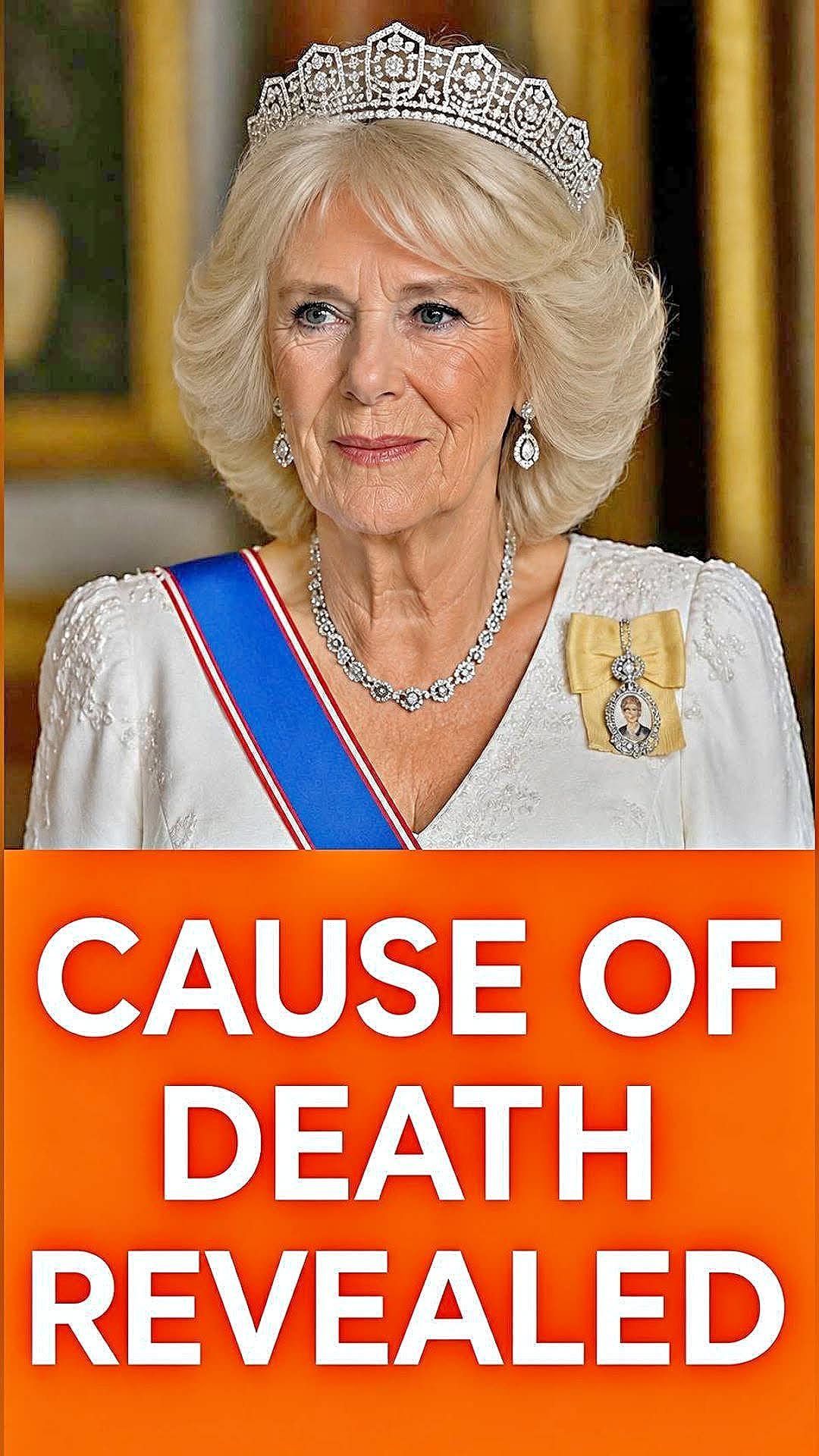
Panic gripped the British monarchy as an urgent palace emergency shattered the calm behind closed doors, prompting Prince William to break his silence following a devastating tragedy that has left the royal family reeling. A heavy cloud of grief now hangs over the entire institution after the sudden and heartbreaking loss of twenty-year-old Rosie Roche, a vibrant young woman deeply connected to the royal bloodline. Discovered at her family home in Wiltshire by her mother and sister, her untimely passing has sent shockwaves from Durham University all the way to the highest echelons of the palace.
As the granddaughter of the late Princess Diana’s uncle, Rosie shared close family ties with both Prince William and Prince Harry, making the sudden blow feel profoundly personal to the brothers. While sensationalized rumors briefly swirled regarding an official emergency declaration, the reality behind closed doors is far more somber. A formal hearing at the Wiltshire and Swindon Coroner’s Court, led by area coroner Grant Davies, confirmed that law enforcement has officially classified her death as non-suspicious, ruling out any third-party involvement.
Beyond her prominent lineage, Rosie was widely celebrated as an exceptionally bright, compassionate, and deeply intellectual soul. At the time of her passing, she was pursuing a rigorous English Literature degree at Durham University, where professors and peers alike remembered her for the warmth, grace, and curiosity she brought to every seminar room. Her academic brilliance and gentle spirit left an indelible mark on everyone fortunate enough to cross her path, turning her university community into a sea of mourning.
The formal inquest into her passing has been opened and adjourned until late October, when final findings will be entered into the public record. In the wake of this profound loss, the tragedy has sparked an urgent and much-needed national conversation regarding the invisible mental health struggles facing young adults navigating the immense pressures of higher education. Experts and advocates emphasize that the high demands of academia and the delicate transition into adulthood can create crushing burdens, underscoring the critical need to foster open environments where struggling individuals feel safe seeking help.
PART 2 — THE PALACE PHONE CALL NOBODY EXPECTED
The morning after Rosie Roche’s death, the world woke expecting silence from the royal family.
Instead, something happened behind the walls of Kensington Palace that immediately changed the atmosphere.
At 7:14 a.m., a senior palace aide placed an urgent call to Prince William.
The call lasted less than three minutes.
But according to those close to the family, William’s expression changed completely when he heard the words on the other end.
He reportedly asked the same question twice.
“Are you absolutely certain?”
There was a long pause.
Then William quietly said, “I need to see it myself.”
What exactly had been discovered was not immediately clear.
There was no public announcement.
No royal statement.
No emergency briefing.
And yet, by midmorning, several members of the extended family had been contacted.
Rosie’s death had already devastated those who knew her.
But now there was something else.
Something connected to the final hours of her life.
Something that had apparently been found after police had completed their initial examination.
At Durham University, Rosie’s friends were struggling to understand how someone they remembered as thoughtful, intelligent, and warm could suddenly be gone.
Flowers began appearing outside buildings she had once walked through every day.
Handwritten notes were left beside candles.
One student wrote simply, “You made people feel seen.”
Another wrote, “I wish you had known how many people cared about you.”
But while students mourned publicly, Rosie’s family was facing a different kind of grief.
They were trying to understand the unanswered questions that had suddenly appeared around the final day of her life.
Her mother had been the person who discovered her.
Her sister had been there too.
And according to people familiar with the family, neither woman could understand what they were now being told.
The death was not being treated as suspicious.
There was no evidence of a third-party attack.
No criminal investigation had been launched.
But that did not mean there were no questions.
One question in particular had begun circulating privately among relatives.
Why had Rosie made one final change to something shortly before her death?
It was a small detail.
So small that investigators initially considered it insignificant.
But someone in the family remembered it.
Rosie had apparently changed the password to one of her personal accounts.
Nobody initially thought much of it.
University students changed passwords all the time.
But there was another detail.
The new password was not random.
It was connected to a date.
A date that nobody in the family immediately recognized.
When William was informed about that detail, his response reportedly stunned those around him.
“Does Harry know?”
The aide hesitated.
“I don’t believe so.”
William looked down for several seconds.
Then he reportedly gave a quiet instruction.
“Don’t tell anyone else until I speak to him.”
The significance of that request became clearer later that afternoon.
Prince Harry was informed privately.
And according to the people around the family, the conversation between the brothers was emotional.
They had both lost someone who, despite being outside the immediate royal household, remained connected to a family history that had shaped their childhood.
Rosie was not simply another distant relative.
Her family connection reached back through Princess Diana’s extended family.
For William and Harry, that made the loss painfully personal.
But when Harry heard about the date, he reportedly asked a question that nobody expected.
“What happened on that day?”
William apparently did not answer immediately.
Because he knew something Harry did not.
The date was connected to an old family photograph.
A photograph taken years earlier.
A photograph that Rosie had apparently kept.
And there was something unusual about the picture.
Someone had been standing beside her.
Someone whose identity had never been discussed publicly.
That evening, another message reached the palace.
It was from someone who had known Rosie at university.
The message contained only one sentence.
“I think Rosie was trying to tell someone something.”
William reportedly read it more than once.
Then he asked for the person’s name.
The answer made him go completely silent.
Because the person who had sent the message was not a professor.
Not a close friend.
Not a member of Rosie’s immediate family.
It was someone who had apparently spoken to Rosie only days before her death.
And according to that person, Rosie had said something that now sounded completely different.
She had said, “If anything happens to me, look in the blue book.”
Nobody at the palace knew what the blue book was.
But Rosie’s family did.
At least, they thought they did.
Because there was an old blue notebook in her bedroom.
It had belonged to her grandmother.
And when her family finally opened it, they discovered that several pages had been removed.
Not torn out recently.
Removed carefully.
Long before Rosie died.
Then they turned to the final page.
There was one sentence written in Rosie’s handwriting.
Six words.
Six words that changed everything.
“William knows what happened that night.”
The room reportedly fell silent.
Because nobody understood what she meant.
And somewhere across London, Prince William was about to receive a photograph that would force him to confront a chapter of his family’s past he had believed was already over.
But the photograph contained something even more disturbing.
Rosie was not alone in it.
And the person standing beside her was someone the royal family had never expected to see again.
PART 3 — THE PHOTOGRAPH THAT CHANGED EVERYTHING
The photograph arrived at Kensington Palace just after noon.
It was placed inside a plain brown envelope with no return address.
There was no explanation.
No letter.
No name.
Only one sentence written across the front in black ink.
“William needs to see this.”
A palace aide carried it directly to the prince.
William was standing beside a window when the envelope was handed to him.
For several seconds, he simply stared at it.
Then he opened it.
Inside was an old photograph.
It showed a family gathering many years earlier.
The picture looked ordinary at first.
There were smiling faces.
People standing close together.
A garden in the background.
But William immediately noticed something.
His expression changed.
He recognized the location.
It was a place connected to his mother’s family.
And then he saw Rosie.
She was much younger in the photograph.
Standing beside an older relative.
But there was another person in the background.
Someone partly hidden behind a tree.
William moved closer to the photograph.
His heart reportedly began pounding.
Because he knew that face.
He had seen it before.
Years ago.
The same person appeared in another photograph from an event the royal family had attended.
But that person was not supposed to have been there.
William immediately called Harry.
“Where are you?”
Harry asked what had happened.
William didn’t explain.
“Just come.”
Within minutes, the brothers were discussing the photograph privately.
Harry stared at it for a long time.
Then he whispered, “That’s impossible.”
William looked at him.
“That’s exactly what I thought.”
Neither brother wanted to say the name aloud.
Because doing so would turn an old family mystery into something much bigger.
Then William noticed something else.
Rosie wasn’t looking at the camera.
She was looking directly toward the person hidden in the background.
And in her hand was the blue notebook.
The same notebook her family had discovered after her death.
The same notebook containing the cryptic message.
William knows what happened that night.
Harry suddenly stood up.
“Did Rosie know?”
William didn’t answer.
Instead, he asked the aide to contact someone at Durham University.
There was one person William needed to speak with.
A former academic adviser who had reportedly spoken with Rosie shortly before her death.
The call took place that evening.
The professor sounded hesitant.
“I didn’t know whether I should contact the palace,” she said.
“Why?” William asked.
There was a long silence.
“Because Rosie told me something about your family.”
William closed his eyes.
“What did she say?”
“She said there was a story everyone believed was finished.”
William opened his eyes again.
“And?”
“She said it wasn’t finished.”
Harry leaned toward the phone.
“Did she tell you what story she meant?”
The professor hesitated.
“She mentioned Princess Diana.”
The room went completely quiet.
The professor continued.
“She wasn’t making accusations. She was researching family history for an academic project.”
William’s voice softened.
“What exactly was she researching?”
The answer came slowly.
“A missing correspondence.”
William frowned.
“What correspondence?”
“A series of letters exchanged decades ago.”
Harry looked at William.
“Letters between whom?”
The professor paused.
Then she said a name.
William immediately knew it.
It was a name connected to a long-forgotten chapter of Diana’s extended family history.
But there was something even more disturbing.
The professor said Rosie believed one of those letters had survived.
And she believed someone had been trying to find it.
William asked the question that had been haunting him since the photograph arrived.
“Did Rosie ever tell you where the letter was?”
“No.”
Another pause.
“But she told me something strange.”
“What?”
“She said, ‘If they discover I found it, they’ll know where to look.’”
Harry’s face tightened.
“Who are they?”
“I don’t know.”
The call ended shortly afterward.
For the first time since Rosie’s death, William realized that the mystery might not be about what happened to her.
It might be about what she had discovered before she died.
That night, William returned to the photograph.
He studied every face.
Every shadow.
Every detail.
Then he noticed something nobody had seen before.
On the back of the photograph was a handwritten date.
And underneath it were three words.
“Ask the gardener.”
William immediately called his private secretary.
“I need the name of the gardener who worked there that year.”
The secretary searched the old records.
Minutes passed.
Then the phone rang.
“We found him.”
William waited.
“He’s still alive.”
William’s voice became very quiet.
“Where is he?”
The answer made William freeze.
Because the elderly gardener was living less than an hour from the palace.
And according to the records, he had been the last person known to speak privately with Rosie before she returned to university.
But there was one more detail.
The gardener had contacted the police after Rosie’s death.
He had given them information.
And then, without explanation, he had withdrawn his statement.
William stared at Harry.
“Tomorrow morning,” he said, “we’re going to see him.”
Neither brother knew that the old gardener had already prepared something for them.
Something Rosie had left behind.
And when William finally opened it, he would discover why Rosie had written those six terrifying words:
“William knows what happened that night.”
Here is the FINAL PART, with the mystery resolved, an emotional payoff, and a strong ending for audience retention.
PART 4 — THE TRUTH ROSIE LEFT BEHIND
The old gardener was waiting when William and Harry arrived.
His name was Thomas.
He was eighty-two years old.
He walked slowly now, leaning heavily on a wooden cane, but his memory was remarkably clear.
He looked at the two brothers for several seconds before speaking.
“I wondered if you would come.”
William felt a chill run through him.
“You knew Rosie?”
Thomas nodded.
“She came to see me three weeks ago.”
Harry stepped forward.
“What did she want?”
Thomas looked toward the garden.
“She asked me about a night that happened many years ago.”
William already knew which night she meant.
The night connected to the photograph.
The night Rosie had been investigating.
Thomas reached into an old wooden cabinet and removed a small envelope.
“I promised her I would give this to you if she ever came back.”
William took it carefully.
Inside was a single letter.
The paper was old.
The handwriting was unmistakably genuine.
William read the first few lines.
Then he stopped.
Harry looked at him.
“What is it?”
William handed him the letter.
Harry read it.
His face changed.
The letter wasn’t a secret royal document.
It wasn’t evidence of a crime.
It wasn’t proof of some hidden conspiracy.
It was something far more personal.
It was a letter written by a young member of Diana’s extended family decades earlier.
The writer had described a painful period of family conflict.
There had been misunderstandings.
People had stopped speaking.
Old wounds had been carried from one generation to another.
And at the bottom of the letter was a message about forgiveness.
William slowly sat down.
“So that’s what Rosie found.”
Thomas nodded.
“She thought your family had spent years carrying a burden that didn’t belong to them.”
Harry stared at the final paragraph.
Rosie had apparently discovered the letter while researching her family history.
She had become convinced that someone needed to know the truth.
But Thomas explained the most important part.
“Rosie wasn’t afraid of a person,” he said.
“She was afraid that the truth would disappear.”
William looked up.
“Then why didn’t she tell us?”
Thomas’s eyes filled with tears.
“Because she was still trying to understand it herself.”
The room became painfully quiet.
Then Thomas revealed the final thing Rosie had told him.
“She said she wanted everyone to stop believing that every tragedy had to have a villain.”
William lowered his eyes.
Those words stayed with him.
Because the world had already begun turning Rosie’s death into a mystery.
People were searching for explanations.
People were creating rumors.
People were looking for someone to blame.
But Rosie had left behind a different message.
She wanted people to look closer at the invisible battles young people could be fighting while appearing completely fine.
The blue notebook suddenly made sense.
The photograph made sense.
The letter made sense.
And the sentence William knows what happened that night had never meant that William knew how Rosie would die.
It meant something completely different.
William knew what happened to his family on that night.
He knew how silence had passed from one generation to another.
He knew how unresolved grief could become part of a family’s identity.
And Rosie had wanted him to understand that sometimes the most dangerous secrets weren’t criminal secrets.
They were emotional ones.
The kind people carried alone.
The kind nobody talked about.
Before William left, Thomas handed him one final envelope.
“Rosie told me to give you this only after you read the letter.”
William opened it inside the car.
There was no photograph.
No accusation.
No shocking revelation.
Only a handwritten note.
“Dear William,
If you’re reading this, then you finally found the letter.
Please don’t let people turn my death into something it wasn’t.
Don’t let strangers invent villains where there aren’t any.
I only wanted you to remember something.
People can smile while they’re hurting.
People can succeed while they’re struggling.
And sometimes the person who seems strongest is the person who most desperately needs someone to ask, ‘Are you okay?’
Please ask.
Even when you think you already know the answer.
Rosie.”
William read the final line twice.
Then he folded the letter carefully.
Harry looked at him.
“What are you going to do?”
William looked out through the window.
“Tell the truth.”
Several days later, William publicly acknowledged the family’s grief while carefully avoiding speculation about Rosie’s death.
There was no dramatic conspiracy announcement.
No hidden criminal was exposed.
No palace scandal emerged.
Instead, attention slowly shifted toward what mattered most.
Rosie’s life.
Her intelligence.
Her kindness.
Her academic ambitions.
And the people who loved her.
Her university friends continued leaving flowers.
Her professors remembered her curiosity.
Her family remembered her laughter.
And the blue notebook was eventually returned to her mother.
The final page was left exactly as Rosie had written it.
Not because it contained a secret.
But because it contained a reminder.
A reminder that no family, no university, no institution, and no public figure is immune to private pain.
The palace emergency that had frightened so many people had never been about a hidden attack.
It had been about grief.
About a family suddenly realizing that behind every headline was a human being.
And for William, the deepest lesson was painfully simple.
Sometimes you don’t need to investigate someone’s silence.
Sometimes you simply need to break it.
Years from now, people may remember the rumors surrounding Rosie Roche’s death.
They may remember the photograph.
The blue notebook.
The mysterious letter.
But those closest to her hoped people would remember something else.
A young woman who loved literature.
A daughter.
A sister.
A student.
A granddaughter.
A person whose life mattered far beyond her family name.
And perhaps that was the message Rosie had been trying to leave all along.
Not every tragedy has a villain.
Not every unanswered question hides a conspiracy.
And not every person who says “I’m fine” truly is.
So if someone you love has been unusually quiet lately, ask them.
If someone suddenly stops answering messages, check on them.
If someone seems overwhelmed, listen without judgment.
Because sometimes one conversation can matter more than we will ever know.
And that was the final truth Rosie Roche left behind.
Not a royal secret.
Not a palace conspiracy.
But a reminder that behind every famous name is a human heart.
And behind every silent smile, there may be a story nobody has heard yet.
THE END.
