During the coronavirus pandemic, a nearly 900-year-old Hopi spiritual prophecy resurfaced to popular attention that seemed to address the crisis head on. The oral tradition remained within their communities until the ancient prophecy aligned with the haunting vision of the atomic bomb’s mushroom cloud that rose above Hiroshima in 1945. Thomas Banyacya was one of the four members appointed by Hopi Elders in 1948 to share a warning with the world that we are at a crossroads. One Path leads to destruction. The other leads to living together harmoniously with nature.
“Mankind has a chance to change the direction of this movement, do a roundabout turn, and move in the direction of peace, harmony, and respect for land and life,” Banyacya shared at United Nations Habitat Forum in Vancouver, British Columbia in 1976. “The time is right now. Later will be too late.”
With this in mind, Lukas Nelson figured this period of uncertainty could go one of two ways.
“You could fall into a spiral of despair—in my world that would manifest itself in smoking weed every day, maybe drinking, just kind of being lazy, and having the same day happen over, and over again, with the same bad habits. And that could easily have happened. But instead, I chose to follow what my inner voice was telling me was the healthiest thing to do, and actually listen to it.”
The artist was born into Outlaw royalty, the son of Willie Nelson, and member of what he describes as “the ultimate road family.”
“I’ve never been anywhere longer than three months, and suddenly here we are, the four of us together,” says Nelson, who bunked up outside of Austin with his father, his mother Annie, and brother Micah. “And thank God we were together. I can’t remember the last time we had that much time together as a family. We had a lot of really important bonding that happened during that time. And I have to say, as terrible as the pandemic has been in so many ways, for my inner peace, I was able to take a lot of good from this time. I was able to pause and reflect.”
A Few Stars Apart, released June 11 via Fantasy Records, is a product of the stillness that ensued since last spring. Nelson, on lead vocals, guitar, and intermittent piano, and his band, Promise of the Real—Anthony LoGerfo (drums, percussion, tambourine), Corey McCormick (bass guitar, upright bass, Mellotron, vocals), Tato Melgar (percussion), and Logan Metz (piano, Wurlitzer, B3 organ, lap steel, banjo, Mellotron, vocals) chronicle Nelson’s journey of coming home in both a physical and spiritual sense.
The galactic motif traces back through his 2020 album, Naked Garden. He refers to “Entirely Different Stars,” the opening track of Naked Garden, as “lift off.”
“The main character of the song is now living on another planet somewhere far away, so it’s a continuation of the story. Now, whatever planet we’re living on, we’re a few stars apart. It’s all a metaphor anyway.”
As their seventh album in just over a decade, A Few Stars Apart highlights the fantastical storytelling that has been overshadowed by the dynamic instrumental scaffolding that upholds their previous works. A fruitful year of contemplation compiled into a towering collection of songs for the band to sift through. Picking their favorites, they went round-by-round until they were left with something cohesive.
“A theme presented itself within that refined collection. We wanted to make a record about songs—lyrics, songwriting. We’ve done so many different types of things in our career, from rock n’ roll to soul. Here, I just wanted to write magical song after magical song.”
With the tactful hand of Grammy Award-winning producer Dave Cobb—whose touch “brought the new songs to life”—they recorded the album with a full band, live on eight-track tape at Nashville’s historic RCA Studio A. Over the course of three weeks, 11 intentional reflections blossomed into a full-bodied meditation on resilience within the human condition.
“When you write a song, you’re in a certain mindset, and it’s within the context of what’s happening around you,” says Nelson.
His introductory single, “Perennial Bloom (Back To You)” dates back to those first few weeks on the cusp of spring. The lyrics speak to summer’s healing, and the misguided early understanding that higher temperatures would weaken the virus that was mercilessly overtaking the global population.
“I was feeling optimistic at that point, about the healing. But, a year later, we now have that optimism and even more reason to be optimistic,” he says. “After I write a song, I always want to release it right away. But in this case, I think that it came out exactly what it was meant to.”
“Leave ‘em Behind” was penned amidst the racial protest and social upheaval in the wake of George Floyd’s murder last May. Unfortunately, that message is still relevant as the crisis has continued across the country.
He explains, “It’s horrible what happened and continues to happen, but I think a lot of good changes came of it. But, you could just see that people were having a really hard time being still, being pent up in their homes, losing their businesses. It was like a powder keg ready to explode. And a really bad side effect of that was aggression and higher instances of domestic abuse and violence—which we all need to talk about more.”
Written with a particular friend in mind, the messaging calls upon all women to know their worth, and recognize their inner strength. Beautiful face, I see your eye / Black and blue don’t make good colors on/ Your salvation does rely / Don’t let your man take everything, he sings.
Sometimes, Nelson explains, when overlaid with a new context, a song strengthens. Listening with 2021 ears, “Focus on the Music” sounds like the events that unfolded.
There’s a storm that’s coming gonna blow my mind / And the things I’m searchin’ for I’ll never find / Close the windows and close the blinds / Shut my eyes and sigh, he sings. The lyrical solution presented throughout — Gotta focus on the music / Focus on the heart of things / Focus on the peace that music brings—became Nelson’s pandemic survival guide.
“It’s weird how sometimes songs will come into a better meaning after you write them. You write them for one reason or another, and then you then you’re shown by life, what the song was really meant for,” he offers, seemingly unphased by the eerie premonition. “So that was a trip for me.”
“More Than We Can Handle” addresses adversity, and the critical role humor plays in the process. To laugh in the face of unprecedented devastation, according to Nelson, reflects resilience.
“There are certain tools you can learn to help allow yourself the space to be joyful without being bogged down by situation-after-situation,” he says. “I think that people need to learn how to just take whatever comes and maintain who they are throughout, which is a difficult lesson, but worth learning.”
Rather than attempting to control the external forces at play, the artist hones in on his realm of control, building strength to cultivate inner resilience.
He points to bullying as an example. “I’m not sure you’ll ever be able to stop bullying as a human condition,” he says. “But what you can do is teach the right tools in order to get through something like that. To be strong enough on the inside and not let it affect you. And I think what this whole pandemic has shown us is that there are some who had this inner resilience to make changes in their lives.”
Considering the duality in human response to trauma, Nelson saw the diverging pathways as a life or death decision. The first is an all-in effort to overcome adversity. He says, “You may be wounded, but you take the time you need to heal. The other path is letting that wound fester, you don’t try to heal and then you die, eventually.”
Now 32 years old , the artist looked to his heroes, like Bob Dylan, Janis Joplin, and Jim Morrison, upholding respect for their influence but certain he does not want to make the same mistakes.
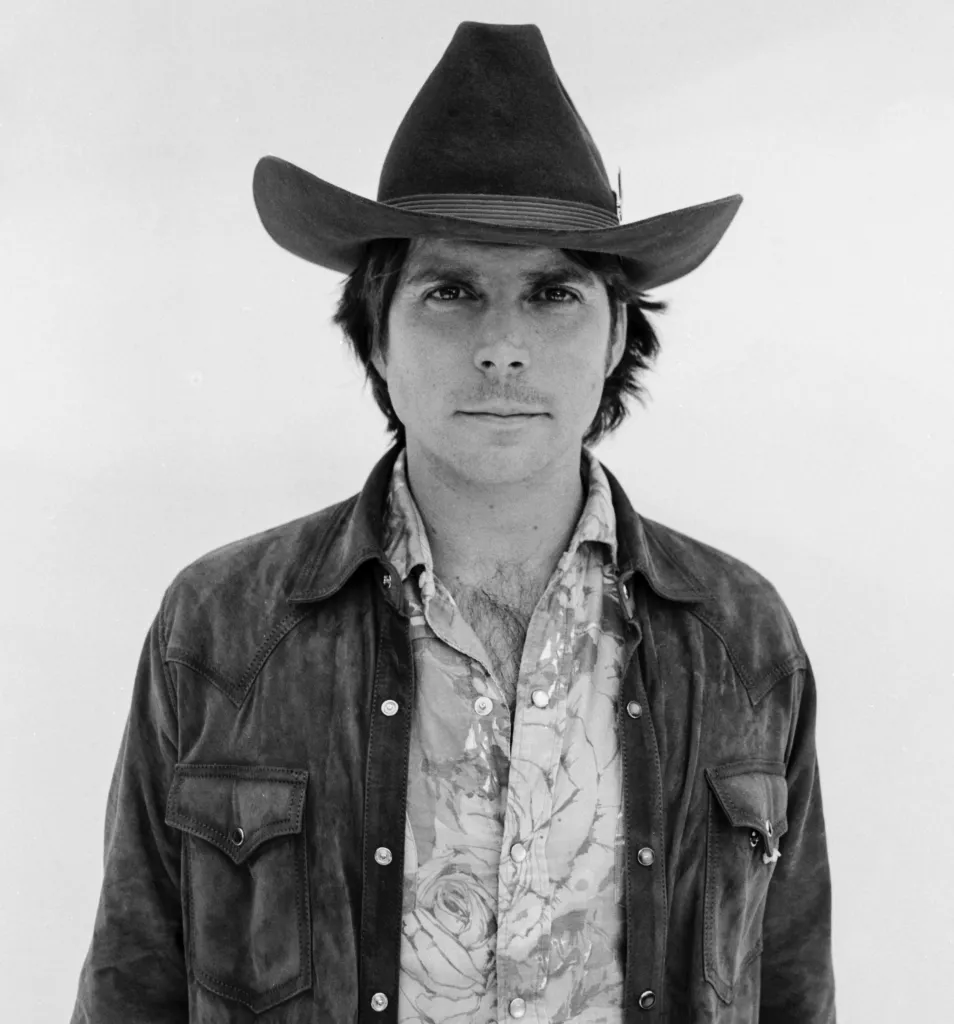
Citing an article sent to him by a friend, the artist introduces the concept of “synaptic pruning,” to explain what neuroscience has to do with his new album.
“The idea,” he postulates, “is to imagine that your brain is like a garden. But instead of growing food, flowers, fruits and vegetables, you grow synaptic connections between neurons that neurotransmitters like dopamine and serotonin use as pathways to travel. So when you cultivate good habits, even just turning a frown upside down, it fires neural signals that create more pathways. And the more you do it, the more they become a default. The more you smile, the more your body releases the chemicals that make you feel happy.”
In that garden, Nelson’s green thumb nurtured the neural pathways that eventually led him home in his heart. His bountiful harvest of 11 intentional tracks suggests that the year was not lost. The collection closes with the piano-driven ballad, “Smile.” In his hopeful summation, he sings “I’m through confessin’, I learned my lesson/ The winding road has brought me home and I can’t help but smile.”
For those fortunate enough to reach the light at the end of a seemingly eternal tunnel, Nelson hopes that as we move forward in our healing, that the fruits of the stillness not be lost on our hurried return to “normal.”
“Your brain can be hacked,” he continues. “And I’ve learned better tools to hack my life and find that peaceful zone, and try to stay in it. Of course, you can’t forever, but the point is to try.”
