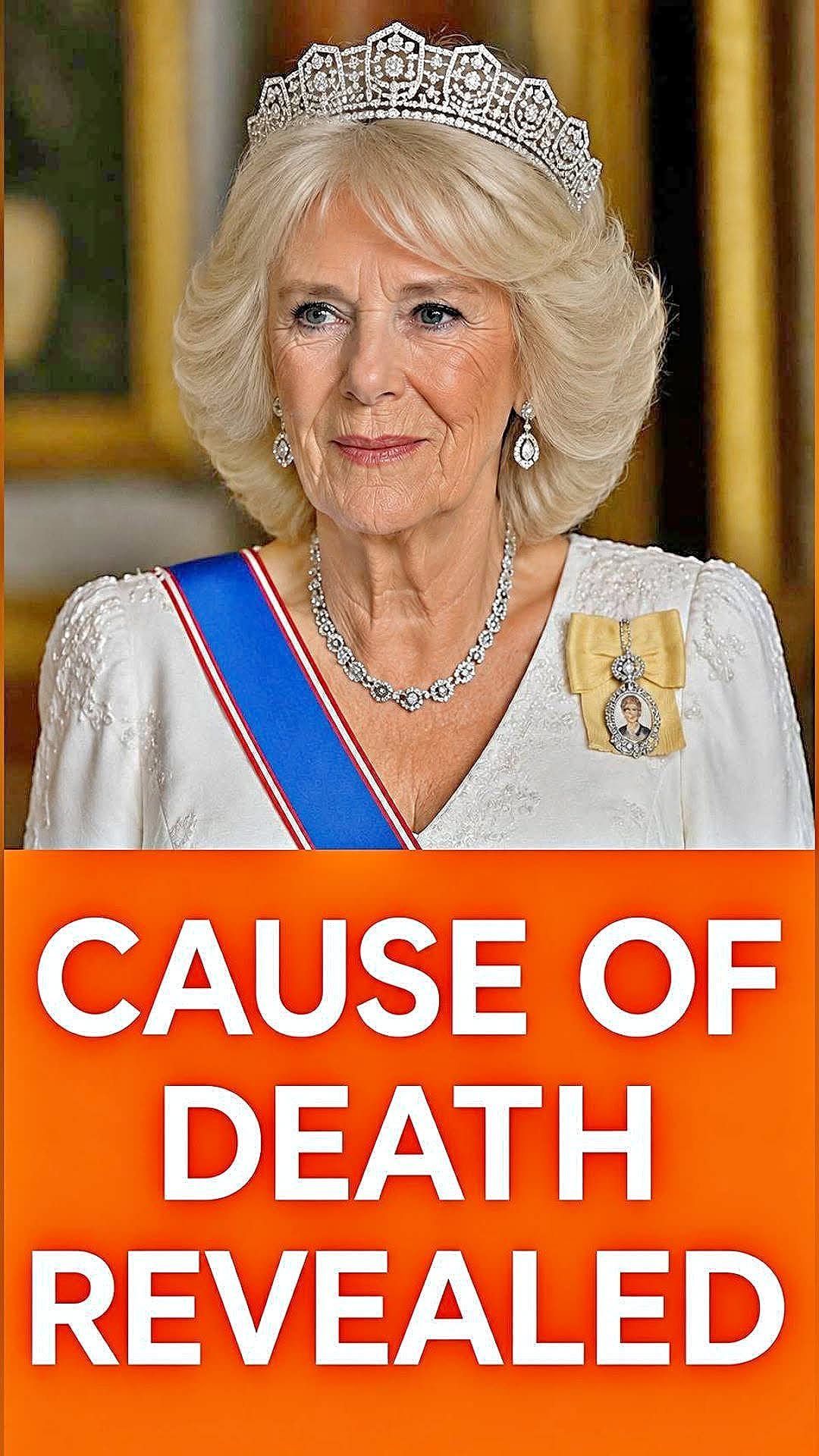
Panic gripped the British monarchy as an urgent palace emergency shattered the calm behind closed doors,
prompting Prince William to break his silence following a devastating tragedy that has left the royal family reeling.
A heavy cloud of grief now hangs over the entire institution after the sudden and heartbreaking loss of twenty-year-old Rosie Roche,
a vibrant young woman deeply connected to the royal bloodline. Discovered at her family home in Wiltshire by her mother and sister,
her untimely passing has sent shockwaves from Durham University all the way to the highest echelons of the palace.
As the granddaughter of the late Princess Diana’s uncle, Rosie shared close family ties with both Prince William and Prince Harry, making the sudden blow feel profoundly personal to the brothers. While sensationalized rumors briefly swirled regarding an official emergency declaration, the reality behind closed doors is far more somber. A formal hearing at the Wiltshire and Swindon Coroner’s Court, led by area coroner Grant Davies, confirmed that law enforcement has officially classified her death as non-suspicious, ruling out any third-party involvement.
Beyond her prominent lineage, Rosie was widely celebrated as an exceptionally bright, compassionate, and deeply intellectual soul. At the time of her passing, she was pursuing a rigorous English Literature degree at Durham University, where professors and peers alike remembered her for the warmth, grace, and curiosity she brought to every seminar room. Her academic brilliance and gentle spirit left an indelible mark on everyone fortunate enough to cross her path, turning her university community into a sea of mourning.
The formal inquest into her passing has been opened and adjourned until late October, when final findings will be entered into the public record. In the wake of this profound loss, the tragedy has sparked an urgent and much-needed national conversation regarding the invisible mental health struggles facing young adults navigating the immense pressures of higher education. Experts and advocates emphasize that the high demands of academia and the delicate transition into adulthood can create crushing burdens, underscoring the critical need to foster open environments where struggling individuals feel safe seeking help.
PART 2 — THE SILENCE BEHIND THE PALACE DOORS
The days following Rosie Roche’s death carried a strange kind of silence.
It was not the ordinary silence of grief, where people gather together, exchange memories, and slowly begin to understand that someone they loved will never walk through the door again. This was different. It was the silence that settles over a family when there are questions no one knows how to answer and emotions too painful to put into words.
At Durham University, Rosie’s absence became impossible to ignore.
Her usual place in lecture rooms remained empty. Her name still appeared on academic lists. Books she had recently studied remained on desks, their pages marked with notes written in her handwriting. Friends who had expected to see her walking across campus suddenly found themselves looking for a familiar face that would never appear.
Some remembered the smallest things.
The way Rosie listened when someone spoke.
The way she could become completely absorbed in a conversation about literature.
The way she could make an ordinary discussion feel important.
And perhaps most painfully, people began remembering moments they had once considered insignificant.
A conversation in a hallway.
A message that had seemed ordinary.
A smile across a classroom.
A goodbye that nobody knew would be the last.
For her family, however, the grief was even more intimate.
Behind the walls of the family home in Wiltshire, there were no cameras, no formal statements, and no carefully prepared words. There was simply the reality of an empty room and the unbearable knowledge that Rosie would not be coming home.
Her mother and sister had been the ones who discovered her, and that fact alone made the tragedy especially devastating.
There are some moments in life that divide time into two parts.
Before.
And after.
For Rosie’s family, the moment they discovered her became that dividing line.
Everything that followed would be measured against it.
Before that day, Rosie was a daughter, a sister, a university student, a relative, and a young woman with a future still unfolding.
After that day, every memory became something precious.
Every photograph became something to protect.
Every message became something impossible to delete.
And every unanswered question became heavier.
Meanwhile, the attention surrounding the tragedy continued to grow.
Because Rosie was not simply a university student whose death had shocked her friends and relatives. She was also part of a family connected to one of Britain’s most famous royal bloodlines.
That connection meant that her loss reached far beyond Wiltshire.
It reached the Prince of Wales.
It reached Prince Harry.
And it reached a family that had already experienced the devastating consequences of losing Princess Diana.
For William and Harry, grief has never been an entirely private emotion.
Their lives have been watched by millions for decades.
Even moments of extraordinary personal pain have often unfolded beneath a relentless public gaze.
But Rosie’s death was different.
She was not a senior royal.
She was not someone whose every movement was followed by photographers.
She was simply a young woman living her life.
And perhaps that made the tragedy even more difficult to comprehend.
The relationship between Rosie and the royal family was not something that defined her entire identity. Those who knew her remembered her first as Rosie.
A student.
A friend.
A granddaughter.
A daughter.
A young woman who loved literature and was building a life of her own.
Yet suddenly, newspapers and social media began discussing her family connection.
Some headlines focused heavily on the palace.
Others suggested that an extraordinary emergency had taken place inside the monarchy.
Rumors moved faster than facts.
But the official information painted a much quieter picture.
There had been no evidence of third-party involvement.
Authorities had classified the death as non-suspicious.
The coroner’s proceedings were underway.
And the final answers would have to wait.
That distinction mattered.
Because when a young person dies suddenly, the human instinct is to search for a reason.
People want a clear explanation.
They want a single event they can point toward.
They want to believe that tragedy must have a visible cause.
But sometimes the truth is more complicated.
Sometimes there are struggles hidden beneath ordinary conversations.
Sometimes someone can appear successful, intelligent, and composed while privately carrying burdens nobody else can see.
That possibility began to change the conversation around Rosie.
Instead of focusing only on her royal connection, people began asking a much more uncomfortable question.
How much do we really know about the people around us?
At university, students were forced to confront that question personally.
The pressures of higher education are often described in terms of examinations, deadlines, essays, and future careers.
But beneath those visible pressures can exist something much harder to see.
Loneliness.
Fear of failure.
Financial uncertainty.
Relationship problems.
Family expectations.
Questions about identity and the future.
The feeling that everyone else seems to know what they are doing while you are secretly struggling to keep up.
For a young person studying far from home, those pressures can become overwhelming.
And because many students are surrounded by other young people who appear happy and confident, suffering can become invisible.
Rosie’s friends began talking about the importance of checking on one another.
Not just asking, “Are you okay?”
But waiting for the answer.
Listening.
And understanding that sometimes “I’m fine” does not mean everything is fine.
Her professors also reflected on the student they had known.
They remembered her intelligence.
They remembered her curiosity.
They remembered the seriousness with which she approached English Literature.
But they also remembered the human being behind the academic work.
That distinction became important.
Because Rosie’s story could not simply become another headline about tragedy.
She had been a person with hopes.
She had been someone who mattered to other people.
And the people who loved her wanted the world to remember that.
As the weeks passed, preparations continued for the formal inquest.
The hearing had been opened and adjourned until late October, meaning that many questions would remain unanswered for some time.
For the family, waiting was its own form of pain.
Grief is difficult enough when answers arrive quickly.
Waiting for official conclusions can make the days feel strangely suspended.
Every week that passed brought another reminder that the story was not finished.
But there was also another reason people were watching closely.
The case had become part of a larger national conversation.
Mental health.
Young adulthood.
University pressure.
The difficulty of recognizing when someone is silently struggling.
The conversation was uncomfortable, but perhaps it needed to be.
Because tragedies involving young people often force society to examine the things it prefers not to see.
How many students feel alone in crowded lecture halls?
How many young adults are terrified about the future but afraid to admit it?
How many parents believe their children are coping because they say they are?
How many friends mistake silence for strength?
There are no easy answers.
And there is no single explanation that can be applied to every tragedy.
But there is one lesson that kept emerging from the grief surrounding Rosie.
People need people.
They need someone who will notice when their behavior changes.
Someone who will ask again.
Someone who will listen without judgment.
Someone who will make it clear that asking for help is not weakness.
For William, the loss carried another layer.
He had grown up knowing what it meant for personal tragedy to become public news.
He knew what it was like for the world to discuss someone you loved while you were still trying to understand the loss yourself.
That experience could never have made Rosie’s death easier.
If anything, it may have made the pain more familiar.
And somewhere behind the formal walls of royal life, there was simply a family grieving a young relative.
No title could make that easier.
No palace could protect anyone from grief.
No public statement could restore the person who had been lost.
The tragedy also brought William and Harry back into the same emotional landscape that had shaped so much of their childhood.
Loss.
Family.
Memory.
And the complicated experience of mourning someone whose connection to their own lives was deeply personal but largely unknown to the public.
There was something profoundly human about that.
Because grief does not care about titles.
It does not care about wealth.
It does not care about palaces or university degrees.
When someone dies, the people left behind still face the same empty chair.
The same unanswered message.
The same memories that suddenly hurt in ways they never had before.
And that may have been the most important part of Rosie’s story.
For all the attention surrounding her royal connection, the tragedy ultimately returned to something much simpler.
A young woman had died.
Her family was heartbroken.
Her friends were grieving.
Her university community was trying to understand the loss.
And a nation was being reminded that behind every statistic about mental health is a real human being.
Someone with a favorite song.
Someone with unfinished plans.
Someone whose future once seemed enormous.
Someone whose absence can change an entire family forever.
As October approached, the anticipation surrounding the inquest quietly grew.
People wanted answers.
But the family wanted something even more important.
They wanted Rosie to be remembered as more than the circumstances of her death.
They wanted people to remember the life that came before it.
The books she read.
The conversations she had.
The friendships she formed.
The kindness she showed.
The possibilities she carried.
And perhaps, most of all, they wanted her story to encourage people to look more carefully at one another.
Because sometimes the person sitting beside you is fighting a battle you cannot see.
Sometimes the brightest person in the room is struggling in silence.
Sometimes the friend who says nothing is the one who most needs someone to ask one more question.
And sometimes, by simply being present, listening, and encouraging someone to seek help, we can make a difference.
Rosie’s story had begun as a devastating loss.
But slowly, it was becoming something else too.
A reminder.
A warning.
And perhaps a call for greater compassion.
Still, one question remained hanging over everything.
What would the October inquest reveal?
What would the official record say about the final unanswered questions surrounding Rosie’s death?
And when the hearing finally returned, would her family receive the clarity they had been waiting for?
For now, there was only waiting.
The palace remained quiet.
The family remained in mourning.
Her university continued without her.
And somewhere among the books, photographs, memories, and messages she had left behind, Rosie’s life continued to speak for itself.
Not as a royal story.
Not as a sensational headline.
But as the story of a twenty-year-old woman whose life had mattered deeply to the people who knew her.
And as October drew closer, everyone who cared about Rosie knew that the next chapter was coming.
The questions had not disappeared.
They were simply waiting for their moment to be answered.
And when that moment finally arrived, the world would be watching.
